
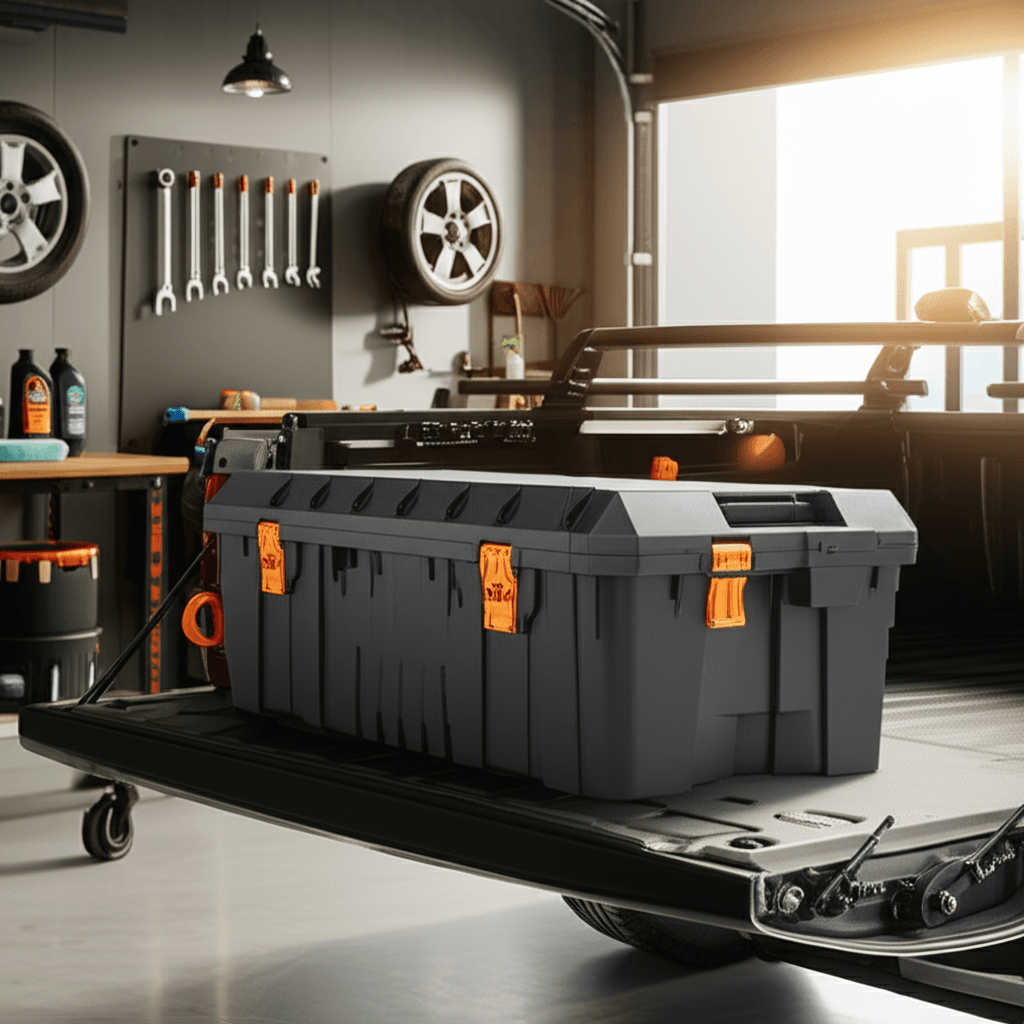
Quick Summary: A waterproof box for your truck bed is essential gear to protect your valuables from weather and theft. It keeps tools, gear, and personal items dry and secure, making it perfect for work or adventure.
Ever worried about your gear getting soaked during a sudden downpour, or worse, stolen from your truck bed? It’s a common headache for truck owners, whether you’re hauling tools for a job or camping equipment for a weekend getaway. But what if there was a simple solution to keep everything safe and dry? There is! Today, we’re diving into the world of waterproof truck bed boxes. These handy compartments are the unsung heroes of truck utility, offering peace of mind and keeping your essentials in pristine condition, no matter what the weather throws at you. Get ready to discover how a good waterproof box can transform how you use your truck!
Why You Need a Waterproof Box for Your Truck Bed
Think about it: your truck bed is an open invitation to the elements. Rain, snow, dust, and humidity can do serious damage to electronics, fabrics, and sensitive equipment. Beyond weather, unsecured items are an easy target for opportunistic thieves. A dedicated waterproof box acts as a fort for your gear, providing a secure, dry, and protected space right in your truck bed. It’s not just about convenience; it’s about protecting your investment, whether that’s a valuable toolset, expensive camera equipment, or essential survival gear for your next adventure.
For anyone who uses their truck for work, hobbies, or travel, a waterproof box is more than just an accessory; it’s a necessity. It allows you to leave items in your truck bed with confidence, knowing they are shielded from the elements and prying eyes. This frees up space in your cab, keeps your truck bed organized, and saves you from the hassle of constantly moving delicate items in and out of your vehicle. Let’s explore the different types and what makes a box truly waterproof and secure.
Types of Waterproof Truck Bed Boxes
Not all truck bed boxes are created equal. When you’re looking for “waterproof,” you’re really looking for robust protection against water intrusion. Here’s a breakdown of the common types:
1. Crossbed Truck Toolboxes
These are probably the most recognizable. They span the width of your truck bed, sitting just behind the cab. Most are designed to be weather-resistant, but true waterproofing varies by design and seal quality.
- Pros: Excellent for storing tools and commonly used items. Doesn’t take up much additional truck bed space. Often lockable for security.
- Cons: Some may not be fully waterproof; water can ingress through poorly sealed lids or seams. Can obstruct visibility if you have a tonneau cover that sits high.
2. Side Access Toolboxes (Or Fenders Boxes)
These fit along the internal walls of your truck bed, often over the wheel well. They offer convenient access from the side and don’t interfere with the main cargo area as much as some crossbed models.
- Pros: Great for storing longer items or frequently accessed gear. Utilizes otherwise dead space.
- Cons: Water resistance can again depend heavily on the seals. Access might be limited when other cargo is present.
3. Under-Rail and In-Rail Mounted Boxes
Subtle and often sleek, these boxes are designed to fit within the confines of your truck bed rails. Under-rail styles sit beneath the top edge of the bed, while in-rail boxes integrate with the rail system.
- Pros: Low profile, often compatible with tonneau covers. Keeps the main bed floor clear.
- Cons: Generally offer less storage volume compared to crossbed models.
4. Sliding Job Boxes or Contractor Boxes
These are larger, often heavy-duty plastic or metal boxes typically used by contractors. Some feature robust latches and seals that can make them very water-resistant, if not fully waterproof.
- Pros: Very durable, large capacity, excellent for tools and bulky items. Often designed for rugged environments.
- Cons: Can be heavy and bulky, may require dedicated mounting. True waterproof ratings should be checked.
5. Custom or DIY Solutions
Some truck owners opt for building their own boxes, or modifying existing storage containers to be waterproof. This can be a cost-effective way to get exactly what you need.
- Pros: Can be tailored to specific needs and truck bed dimensions. Potentially cheaper if you have the skills and materials.
- Cons: Requires significant DIY skill and knowledge to ensure proper waterproofing and security.
What Makes a Truck Bed Box Truly Waterproof?
The term “waterproof” can sometimes be used loosely in product descriptions. For genuine protection, look for these features:
- Gasket Seals: High-quality rubber or silicone gaskets around the lid opening are crucial. These create a tight seal when the lid is closed, preventing water from seeping in. The material should be durable and resistant to UV and temperature changes.
- Drain Plugs: While not preventing water from entering, well-placed drain plugs at the bottom of the box allow you to easily empty any accumulated moisture or wash the inside clean without having to tip the entire box.
- Structural Integrity: The box itself should be constructed from materials that don’t absorb water and have sealed seams. Welded seams on metal boxes or molded, seamless designs on plastic boxes are superior.
- Secure Latches: Latches should pull the lid down tightly against the gasket to ensure a good seal. They should also be lockable to prevent not just water, but also unauthorized access.
- Drainage Channels: Some advanced designs incorporate channels that direct any water that might get past the primary seal away from the contents before it can enter.
- IP Rating: For the most serious protection, look for boxes with an Ingress Protection (IP) rating. This is a standardized way to measure how well an enclosure protects against solids (like dust) and liquids (like water). For example, an IP67 rating means the enclosure is dust-tight and can withstand immersion in water up to 1 meter for 30 minutes. While uncommon for basic truck boxes, higher-end or specialized storage solutions might offer these. You can learn more about IP ratings from organizations like the International Electrotechnical Commission (IEC).
Essential Features to Look For
Beyond waterproofing, consider these features to get the most out of your truck bed box:
- Material: Aluminum is popular for its strength, light weight, and rust resistance. Steel offers durability but is heavier and prone to rust if the coating is compromised. High-impact plastic (like polyethylene) is lightweight, corrosion-resistant, and often more affordable, but can become brittle in extreme cold.
- Size and Capacity: Measure your truck bed carefully and consider what you’ll be storing. Do you need space for long tools, or just smaller essentials? A box that’s too large can be cumbersome, while one too small won’t meet your needs.
- Mounting System: How does the box attach to your truck? Does it require drilling, or does it mount using existing holes or clamps? Some systems are easier to install than others.
- Locking Mechanism: Keyed locks offer security, while padlock-ready latches provide flexibility. Consider how robust the locking mechanism is.
- Internal Organization: Some boxes come with dividers, trays, or compartments to help you keep things tidy. This can be a huge advantage for toolboxes or gear storage.
- Gas Shocks: These assist in lifting the lid and hold it open, making access easier and safer, especially on windy days.
- Compatibility: Ensure the box will fit with any existing bed liners, tonneau covers, or other accessories you have.
Choosing the Right Waterproof Box: A Comparison
To help you decide, here’s a table comparing common box types based on key criteria. Remember that specific models within each category will vary. Aim for products with strong reviews emphasizing their water-resistance.
| Feature | Crossbed Toolbox | Side Access Toolbox | Under-Rail / In-Rail Box | Heavy-Duty Job Box |
|---|---|---|---|---|
| Primary Use | Tools, general gear | Tools, longer items, frequently accessed gear | Smaller essentials, security, aesthetics | Heavy tools, equipment, security |
| Water Protection Level (Typical) | Weather-resistant to moderately waterproof | Weather-resistant to moderately waterproof | Good weather resistance, can be very waterproof | Highly weather-resistant to waterproof (model dependent) |
| Security (Locking) | Usually integrated locks | Usually integrated locks | Often integrated locks | Often integrated locks or padlock points |
| Installation Complexity | Moderate (may require drilling) | Moderate (may require drilling) | Easy to Moderate (clamp-style often available) | Moderate to Complex (may require mounting hardware) |
| Visibility Impact | Can obstruct rear view slightly | Minimal impact | Minimal impact | Can vary significantly |
| Storage Capacity | High | Moderate | Low to Moderate | Very High |
| Cost (Typical Range) | $$ – $$$ | $$ – $$$ | $ – $$$ | $$$ – $$$$ |
Note: Price ranges are relative ($ = lowest, $$$$ = highest). Always check the specific product’s features and reviews for its actual waterproof capabilities.
Installation: Getting Your Waterproof Box Set Up
The installation process can vary greatly depending on the type of box and your truck model. However, here’s a general guide for a common crossbed toolbox. Always refer to your box’s specific installation manual.
Tools You Might Need:
- Drill and drill bits (if drilling is required)
- Wrench or socket set
- Screwdriver set
- Measuring tape
- Safety glasses
- Work gloves
- Caulking gun and silicone sealant (optional, for extra sealing)
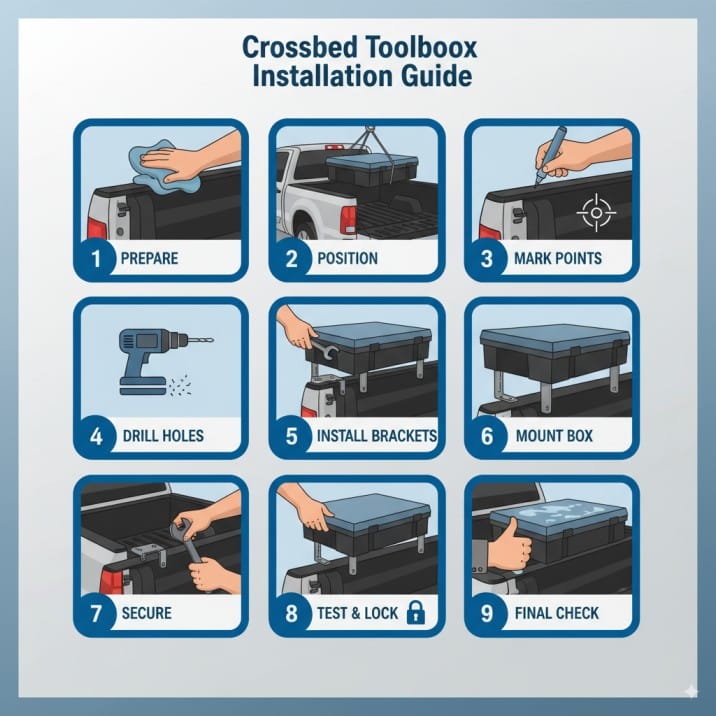
General Installation Steps for a Crossbed Toolbox:
- Prepare the Truck Bed: Clean the area where the box will sit, usually along the top edge of the truck bed, just behind the cab. Ensure the surface is dry.
- Position the Box: Place the toolbox in the desired location across the bed. Ensure it’s centered and level. Check for clearance with any existing accessories.
- Mark Mounting Points: Carefully mark the locations where the mounting brackets will attach to the truck bed rails. For many boxes, this will require drilling through the bed rail caps.
- Drill Pilot Holes: If drilling is necessary, use a drill bit slightly smaller than your mounting screws to create pilot holes at the marked locations. It’s a good idea to use transfer punches if you have them for precise hole placement. For drilling into exposed metal, consider applying a rust inhibitor to the edges of the holes.
- Install Mounting Brackets: Attach the brackets to the truck bed rails using the provided hardware. Some systems use clamps that grip the inside of the bed rail, avoiding the need for drilling. Ensure brackets are secure but avoid overtightening, which could strip threads or crack plastic components.
- Mount the Toolbox: Carefully place the toolbox onto the installed brackets. Align the mounting holes on the box with those on the brackets.
- Secure the Toolbox: Fasten the toolbox to the brackets using the supplied bolts, nuts, and washers. Again, tighten securely but avoid overtightening.
- Test the Lid and Locks: Open and close the lid to ensure it operates smoothly. Test the locking mechanisms to confirm they engage properly.
- Optional Sealing: For extra peace of mind, you can apply a bead of automotive-grade silicone sealant around the edges where the box meets the truck rails, especially if drilling was involved. Allow the sealant to cure according to the manufacturer’s instructions.
- Final Check: Give everything a final once-over. Ensure all hardware is tight and the box is stable.
Important Note on Drilling: If your truck bed is new or has a factory coating you want to preserve, consider options that don’t require drilling. If you do drill, take precautions against rust. For a comprehensive guide on protecting your truck bed, resources like those from the U.S. Department of Transportation or a reputable automotive site can offer valuable tips on materials and methods.
Maintaining Your Waterproof Truck Bed Box
To ensure your waterproof box continues to protect your gear for years to come, a little maintenance goes a long way:
- Regular Cleaning: Wash the exterior and interior of the box periodically with mild soap and water. This removes dirt, salt, and grime that can degrade seals or cause corrosion.
- Inspect Seals: Frequently check the rubber or silicone gaskets for cracks, tears, or signs of wear. Clean them with a damp cloth and, if they seem dry, consider applying a silicone protectant (available at auto parts stores) to keep them supple. A well-maintained seal is key to waterproofing.
- Check Latches and Hinges: Ensure latches operate smoothly and lock securely. Lubricate hinges if they become stiff.
- Drain Any Moisture: If you notice any condensation or water inside, use the drain plugs (if available) or wipe it dry immediately.
- Tighten Hardware: Periodically check that all mounting bolts and screws are still secure, especially after driving over rough terrain.
- Inspect for Damage: Look for any cracks, dents, or corrosion on the box itself that could compromise its integrity or waterproof capabilities.
Frequently Asked Questions (FAQ)
- Q1: Will a waterproof box for my truck bed fit my specific truck model?
- A1: Truck bed boxes are designed to fit specific truck makes, models, and bed lengths (e.g., short bed, standard bed, long bed). Always check the product description for compatibility with your truck’s year, make, model, and bed size before purchasing.
- Q2: How do I know if a box is truly waterproof and not just weather-resistant?
- A2: Look for features like high-quality, continuous rubber or silicone gasket seals around the lid, seamless construction, and robust, tight-sealing latches. Some high-end boxes may even list specific IP (Ingress Protection) ratings, which indicate their resistance to dust and water intrusion.
- Q3: Can I install a truck bed box myself, or do I need a professional?
- A3: Many truck bed boxes, especially clamp-on or some crossbed models, can be installed by most DIYers with basic tools. Boxes that require drilling may be more intimidating, but with careful measurement and following instructions, they can also be a DIY project. If you’re unsure, a professional shop can install it for you.
- Q4: Will a truck bed box prevent theft as well as keep my items dry?
- A4: Most truck bed boxes come with integrated locks or provisions for padlocks, offering a significant deterrent against theft. However, no lock is foolproof. A sealed, locked toolbox makes it much harder and more time-consuming for a thief compared to loose items in an open bed.
- Q5: How much storage capacity can I expect from a typical waterproof truck bed box?
- A5: Capacity varies greatly by box type and size. Small under-rail boxes might hold a few gallons, while large crossbed or job boxes can hold tens of gallons, easily accommodating tool sets, camping gear, or sports equipment.
- Q6: Are there options for waterproof truck bed boxes that work with a tonneau cover?
- A6: Yes! Under-rail or in-rail mounted boxes are specifically designed to sit below or within the truck bed rails, allowing most types of tonneau covers (rolling, folding, or hard covers) to function properly. Crossbed boxes may or may not be compatible depending on their height and how your tonneau cover sits.
- Q7: What kind of maintenance am I looking at for a waterproof truck bed box?
- A7: Maintenance typically involves cleaning the box regularly, inspecting and cleaning the rubber seals, checking that latches and hinges operate smoothly, and tightening any mounting hardware periodically. Keeping the seals in good condition is the most crucial aspect of maintaining its waterproof integrity.
Investing in Your Truck’s Utility and Your Peace of Mind
Choosing a waterproof box for your truck bed is a smart investment.