
Quick Summary:
Choosing the right roof box size depends on your vehicle type, how much gear you need to carry, and your personal preferences. Measure your vehicle’s available roof space and consider the volume (liters) or length (feet/inches) needed for your luggage, sports equipment, or camping gear. Always check your car’s roof load capacity before purchasing a roof box.
Heading out on an adventure, but your car is bursting at the seams? It’s a familiar feeling for many travelers! Whether you’re packing for a family vacation, a weekend camping trip, or a ski holiday, extra cargo space can be a game-changer. A roof box is a fantastic solution, but knowing which size to pick can feel a bit overwhelming at first. Don’t worry, I’m Kelly Hester, your go-to guide for all things automotive gear, and I’m here to make selecting the perfect roof box size as easy as packing it!
This guide will walk you through everything you need to consider, from your car’s dimensions to the type of gear you’ll be stowing away. We’ll break down the simple steps to ensure you get a roof box that fits perfectly, looks great, and safely carries your stuff, so you can focus on the fun part – planning your next journey!
Why Roof Box Size Matters
Picking the right size roof box isn’t just about aesthetics; it’s crucial for functionality, safety, and even how your car handles on the road. An improperly sized box can:
- Obstruct your view: A box that’s too long or too far forward can block your driver’s view.
- Interfere with car features: It might hit your trunk lid, tailgate, or even your car’s antenna.
- Affect aerodynamics: A box that’s too large for your car can create extra drag, increasing fuel consumption and wind noise.
- Exceed weight limits: Overloading your roof box or exceeding your vehicle’s roof load capacity can be dangerous.
- Look out of proportion: A tiny box on a large SUV or a massive box on a small hatchback simply doesn’t look right!
Getting the size right ensures you maximize your storage potential without compromising safety or usability. Let’s dive into how to figure out what size is best for you.
Understanding Roof Box Dimensions and Capacity
Roof boxes are typically described by two key measurements:
- Volume (in Liters): This tells you how much stuff can fit inside. Think of it like the internal capacity of a suitcase.
- Length (in Feet or Inches): This is the external measurement of the box itself.
Manufacturers often use liter capacity as it’s a universally understood measure of space. However, the length is also vital for ensuring it fits your car’s roof without overhang or interference with the vehicle’s doors.
How Much Volume Do You Need?
The volume you need depends entirely on what you plan to carry and how many people are traveling. Here’s a general guide:
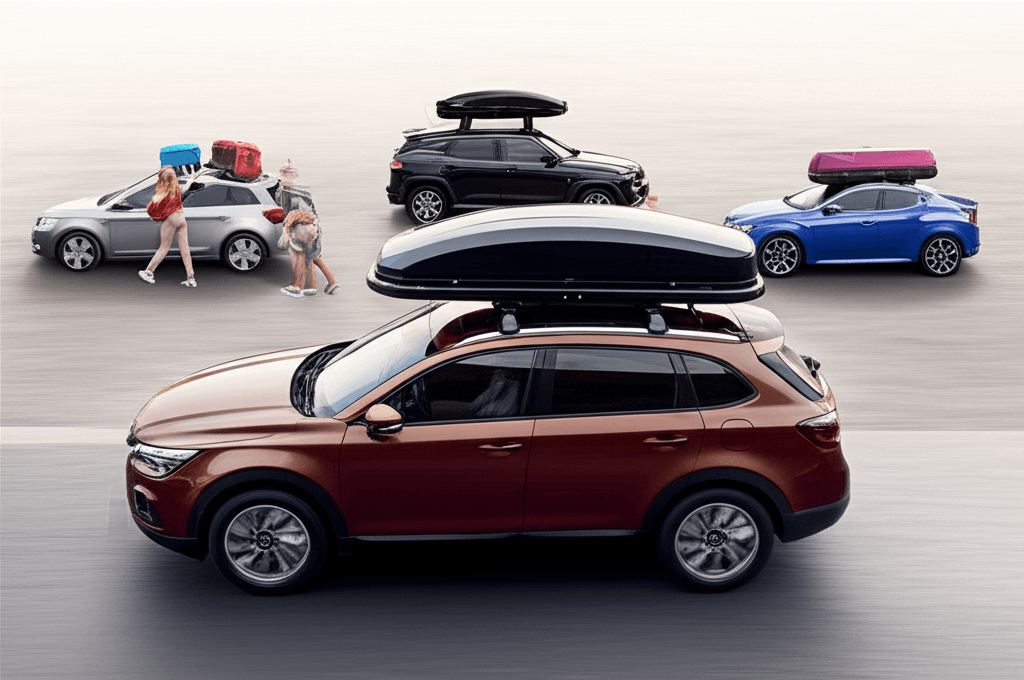
- Small Vehicles (e.g., Sedans, Compact SUVs, Hatchbacks): 250-350 Liters. Good for a few weekend bags, camping essentials for two, or some ski gear.
- Medium Vehicles (e.g., Mid-size Sedans, Crossovers, smaller SUVs): 350-450 Liters. Suitable for family holiday luggage, extensive camping gear for a small family, or multiple sets of skis and snowboards.
- Large Vehicles (e.g., Large SUVs, Wagons, Minivans): 450-650+ Liters. Ideal for maximum storage, carrying bulky items like kayaks (demounted), large tents, or enough gear for extended family trips.
Length Considerations
While volume tells you how much fits inside, length determines if it physically fits on your roof, especially with rear hatchbacks. A good rule of thumb is to keep the box length to about two-thirds of your vehicle’s roof length. For cars with rear hatchbacks, you want to avoid the box extending so far back that it interferes with opening the trunk. Many roof boxes are designed with tapered rears to help with this.
Step-by-Step Guide to Choosing Your Roof Box Size
Let’s walk through the process methodically. Follow these steps to find the perfect fit:
Step 1: Assess Your Vehicle’s Roof Space
This is the most critical physical measurement. You need to know the usable length and width of your vehicle’s roof. Here’s how:
- Measure the distance between your roof rack rails (if you have them): If you have factory-installed or aftermarket roof racks (crossbars), measure the distance from the front of your front crossbar to the rear of your rear crossbar. This is the most common mounting area.
- Measure the total roof length: If you don’t have crossbars or plan to install them, measure the total length of your car’s roof from the windshield base to the rear. Be mindful of any spoilers or bodywork that might limit placement.
- Consider width limitations: While less common as a primary constraint, some very wide boxes might not be ideal for narrower vehicles.
Pro Tip: Use a flexible measuring tape or a piece of string and a tape measure for accuracy. Have a friend help you get the best measurements.
Step 2: Determine Your Cargo Needs
Think about what you’ll be packing. This dictates both the volume and the shape of the box you’ll need.
- Luggage: Soft duffel bags are more forgiving and can be compressed. Hard suitcases take up more fixed space.
- Sports Equipment:
- Skis/Snowboards: Measure the longest ski or snowboard. Most long, narrow boxes are designed for these.
- Camping Gear: Tents, sleeping bags, cooking equipment can be bulky and irregularly shaped.
- Other Gear: Strollers, beach chairs, hiking boots, etc.
- Number of Passengers: More passengers generally mean more stuff!
Consider your most frequent or largest cargo. If you only occasionally need to carry skis, you might opt for a more versatile box. If ski trips are your main use, a dedicated ski box might be best.
Step 3: Check Your Vehicle’s Roof Load Capacity
Every vehicle and its roof rack system has a maximum weight it can safely support. This is often found in your car’s owner’s manual or on a sticker on the driver’s side doorjamb. It’s crucial to understand:
- Vehicle Roof Load Limit: This is the total weight the car’s roof structure can handle, including the weight of the roof box itself and all the gear inside.
- Crossbar Load Limit: Your roof rack crossbars also have a weight capacity, which might be lower than the vehicle’s roof limit.
Example: If your vehicle’s roof load limit is 165 lbs (75 kg) and your empty roof box weighs 50 lbs (22 kg), you only have 115 lbs (53 kg) for your gear.
This is critical for safety. Exceeding this limit can damage your car, compromise handling, and make your vehicle unstable, especially at speed or during sudden maneuvers. Always err on the side of caution. You can find more information on roof load capacities from resources like the National Highway Traffic Safety Administration (NHTSA), although they focus on vehicle safety overall, your owner’s manual is the most specific resource for your car.
Step 4: Measure Your Vehicle Against Potential Box Sizes
Now it’s time to match your measurements. When looking at roof boxes, you’ll see their length, width, and liter capacity.
- Length Clearance: Hold a tape measure against your car’s roof. Compare the box length to the distance between your crossbars and ensure it doesn’t extend too far forward (blocking vision) or too far back (hitting the tailgate). A common guideline is that the box shouldn’t extend beyond the front vehicle doors for optimal balance and hatchback clearance.
- Width Clearance: This is less critical but ensures the box doesn’t seem disproportionately wide or narrow for your vehicle.
Tip for Hatchbacks: Park your car, open the trunk, and place a broomstick or similar object at the point where the top of the trunk lid opens to the furthest extent. Measure the distance from the rear of your rear crossbar to this point. This gives you a safe buffer zone for your roof box length. Aim for a box, when mounted, that doesn’t go past the B-pillar (the pillar between the front and rear doors) if possible, or has a significantly tapered tail.
Step 5: Consider Box Shape and Design
Roof boxes come in various shapes:
- Long and narrow: Best for skis, snowboards, or fishing rods. Offers good aerodynamics.
- Short and wide: Offers more overall volume and is good for luggage, camping gear, and irregularly shaped items.
- Aerodynamic profiles: Many modern boxes are designed with sporty, low-profile shapes to reduce wind noise and drag.
Think about how the shape of the box complements your vehicle and your cargo.
Common Roof Box Sizes and Their Uses
Here’s a table to give you a clearer idea of typical sizes and what they’re best suited for:
| Typical Length | Typical Volume (Liters) | Best For | Vehicle Type Examples |
|---|---|---|---|
| 5 to 5.5 ft (approx. 150-170 cm) | 250 – 350 L | Weekend trips, a few bags, ski gear for 2 people. Ideal for smaller loads. | Small Hatchbacks, Sedans, Small SUVs, Crossovers |
| 6 to 6.5 ft (approx. 180-200 cm) | 350 – 450 L | Family holidays, larger camping trips, multiple ski setups for a family. Good all-rounder. | Mid-size Sedans, Wagons, Crossovers, Mid-size SUVs |
| 7 ft and up (approx. 210 cm+) | 450 – 650+ L | Maximum storage, large families, bulky items, long expeditions. | Large SUVs, Wagons, Minivans, Long Rooflines |
Roof Box Length vs. Vehicle Roof Length
A common mistake is buying a box that is too long for the vehicle’s roof, especially for cars with a rear hatch that opens upwards. Imagine your roof as a canvas; you want the box to fit proportionally without encroaching on vital areas.
General Guideline: The roof box length should ideally be no more than 60-70% of the vehicle’s total roof length. For shorter roofs, this means you’ll need a shorter box and potentially less volume, so prioritize your cargo needs.
Example for a Hatchback:
You have a compact SUV with a roof length of 6 feet. A 5.5-foot (approx. 1.7m) roof box would be a good starting point. If the box has a tapered rear, you might even get away with a slightly longer one, but always check that the rear hatch doesn’t hit it when fully open.
For vehicles with roof rails that run the full length of the roof (like many SUVs and wagons), you have more flexibility on width, allowing for potentially wider boxes. However, the front-to-back positioning is still limited by the length of the rails and the vehicle’s shape.
Compatibility: Roof Box to Roof Rack
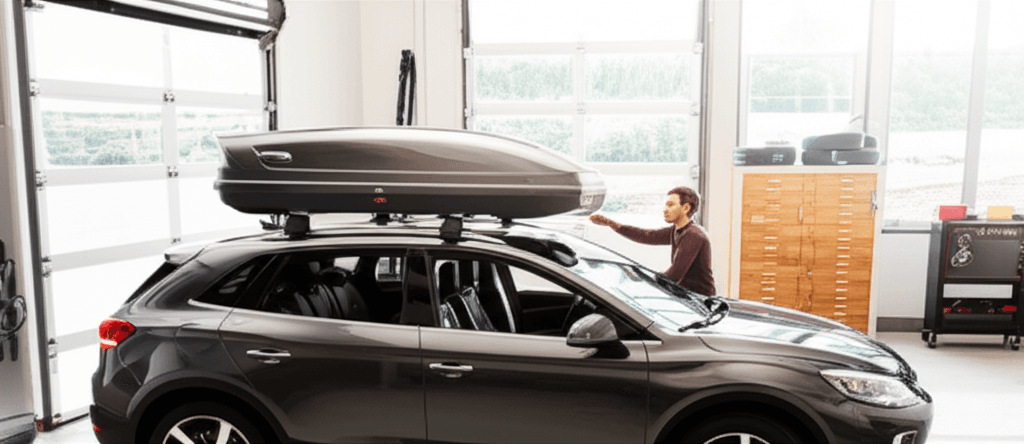
Your roof box doesn’t attach directly to your car’s roof; it attaches to your roof rack system, which typically consists of crossbars. Ensure your chosen roof box is compatible with your existing or planned roof rack system. Most modern roof boxes use U-bolts or clamp systems that fit a wide range of crossbar shapes and sizes (from square bars to aero bars).
Key Compatibility Points:
- Crossbar Width: The U-bolt or clamp system on the roof box must be able to fit around your crossbar’s dimensions.
- Crossbar Spacing: The mounting points on the roof box need to align with the distance between your car’s crossbars. Most boxes have a range, but very wide or narrow spacing can be an issue.
- Roof Rack Type: Ensure the mounting hardware suits your specific rack (e.g., factory rails, aftermarket bars).
When buying, check the product specifications for crossbar compatibility. Brands often list the maximum crossbar width and height they can accommodate. For more details on roof rack systems themselves, consult resources like eTrailer’s Fit Guide, which offers practical insights into rack compatibility.
Tips for Maximizing Roof Box Space
Once you have the right size box, packing it efficiently is key!
- Pack Strategically: Place heavier items in the center, over the crossbars, for better weight distribution and handling.
- Use Soft Bags: Duffel bags and compression sacks are easier to fit into odd spaces than rigid suitcases.
- Fill Gaps: Use smaller items like jackets, blankets, or towels to fill any empty spaces and prevent items from shifting during transit.
- Don’t Overpack: Remember the weight limit! It’s easy to cram too much in.
- Straps are Your Friend: Most boxes come with internal straps. Use them to secure your load.
Proper loading not only maximizes space but also improves vehicle stability and safety.
Common Pitfalls to Avoid
Here are a few things to watch out for:
- Ignoring Vehicle Load Limits: This is the most dangerous mistake.
- Not Measuring Your Roof: Guessing is a recipe for disaster.
- Buying Too Big for a Hatchback: Ensure your trunk can still open fully.
- Forgetting About Wind Noise: Larger boxes can generate more noise. Some designs are better than others.
- Not Checking Crossbar Compatibility: The box has to mount to something!
Taking a few extra minutes for careful measurement and consideration will save you a lot of headaches down the road.
Frequently Asked Questions (FAQ)
Q1: How do I measure my car’s roof for a roof box?
Measure the distance between your roof rack crossbars. If you don’t have crossbars, measure the total length of your car’s roof from the windshield base to the rear. Also, note the distance from the rear crossbar to the edge of your rear hatch. This helps determine the maximum box length for your vehicle.
Q2: Can a roof box be too big for my car?
Yes. A box can be too long, interfering with your rear hatch or driver’s visibility. It can also be too heavy when loaded for your car’s roof load capacity, or it can simply look disproportionate and negatively affect vehicle handling due to its size and weight.
Q3: How much weight can I put in a roof box?
This depends on your vehicle’s roof load capacity and your crossbar’s load capacity, minus the weight of the roof box itself. Always check your car’s owner’s manual for the specific weight limit. You can typically store between 100-150 lbs (45-70 kg) of gear, but this varies significantly by vehicle.
Q4: Will a roof box affect my car’s gas mileage?
Yes. Adding a roof box, especially an empty one, increases aerodynamic drag. This will generally reduce your fuel efficiency, with the impact varying based on box size, shape, speed, and driving conditions. Expect a noticeable decrease, possibly 5-15%, or more at highway speeds.
Q5: Do I need roof rails to install a roof box?
You need a roof rack system, which usually comprises crossbars, to mount a roof box. Many cars come with factory-installed roof rails (side rails) or a fixed-point mounting system. You then attach crossbars across these rails. Some cars might require specific mounting kits for the crossbars if they don’t have rails. A roof box always attaches to crossbars, not directly to the car’s roof.