
Looking for a camper for your 5.5-foot truck bed? Discover the best truck campers designed to fit, offering adventure without needing a bigger vehicle. We’ll guide you through choosing, installing, and enjoying your perfect mobile base camp.
So, you’ve got a truck with a 5.5-foot bed and a serious case of wanderlust? That’s fantastic! The dream of hitting the open road, exploring new trails, and sleeping under the stars is totally within reach, even with a standard short truck bed. It might seem like a puzzle at first, trying to find a camper that fits perfectly and doesn’t feel cramped. But don’t worry, you’re in the right place! This guide is all about making that dream a reality, the easy way.
We’ll break down exactly what you need to know to find the right camper for your 5.5-foot truck bed. We’ll talk about the types of campers available, what features to look for, and how to make sure it’s a good fit for your truck. Get ready to turn your truck into your personal adventure machine!
Why a 5.5-Foot Truck Bed Camper is a Smart Choice
Got a truck with a 5.5-foot bed? You’re not alone! This is a super common size for many popular trucks. The good news is, you don’t need a massive rig to enjoy the freedom of a truck camper. A camper designed for your 5.5-foot bed offers a sweet spot: it gives you a comfortable place to sleep and live, but it’s still manageable to drive and park.
Think about it: no need for a dually or a super-long wheelbase. You get the convenience of a more standard-sized vehicle, opening up more campgrounds and trails. Plus, many newer campers are designed specifically for these shorter beds, meaning they’re built to fit snugly and maximize space.
The Appeal of Compact Adventure
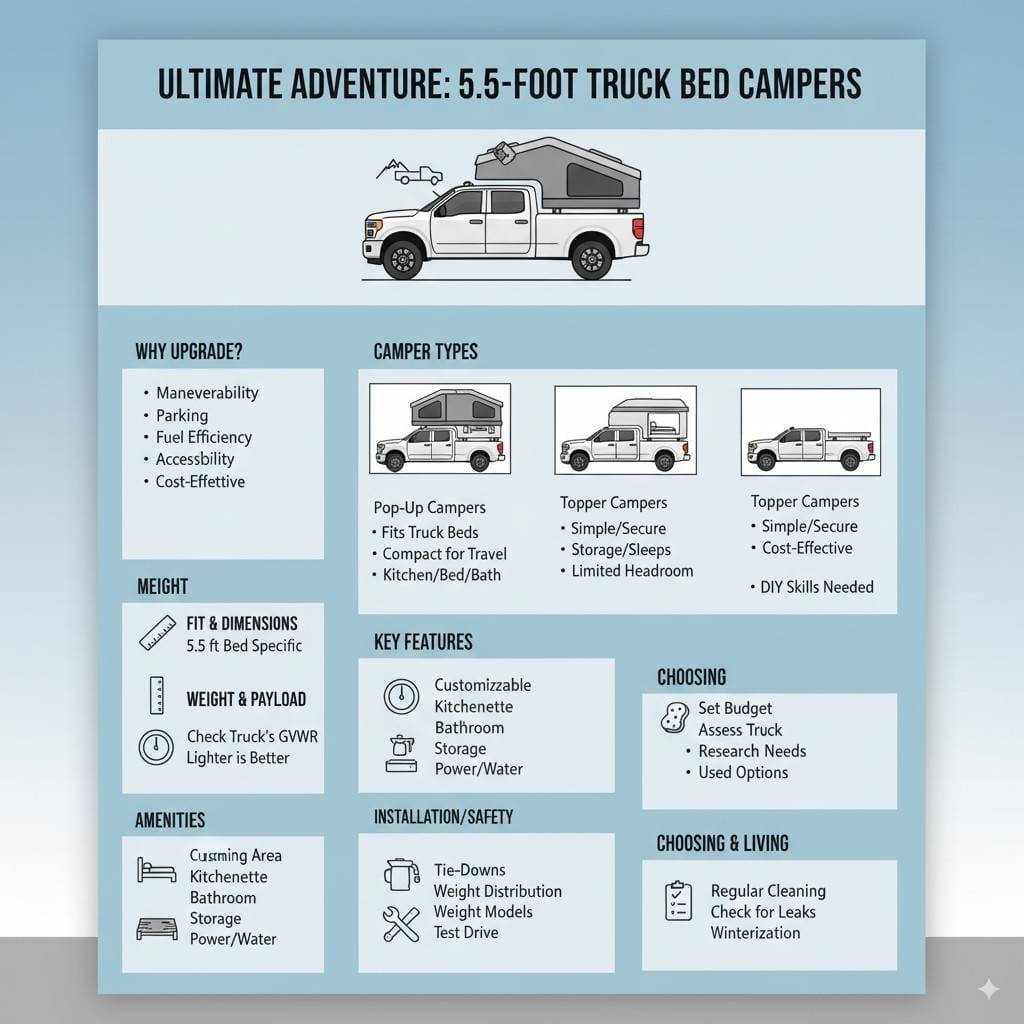
- Maneuverability: Easier to navigate tight roads, city streets, and busy campgrounds.
- Parking: Fits into more standard parking spaces.
- Fuel Efficiency: Generally lighter and more aerodynamic than larger RVs, potentially saving on gas.
- Accessibility: Many models are designed for easy setup and takedown, perfect for beginners.
- Cost-Effective: Often a more budget-friendly entry into the RV lifestyle.
Types of Campers for a 5.5-Foot Truck Bed
When we talk about campers for your 5.5-foot truck bed, we’re usually focusing on a few main types. These are designed to sit right in the bed, giving you a cozy and functional living space while keeping your truck’s regular driving capabilities.
1. Truck Bed Campers (often called “Pop-Ups” or “Slide-ins”)
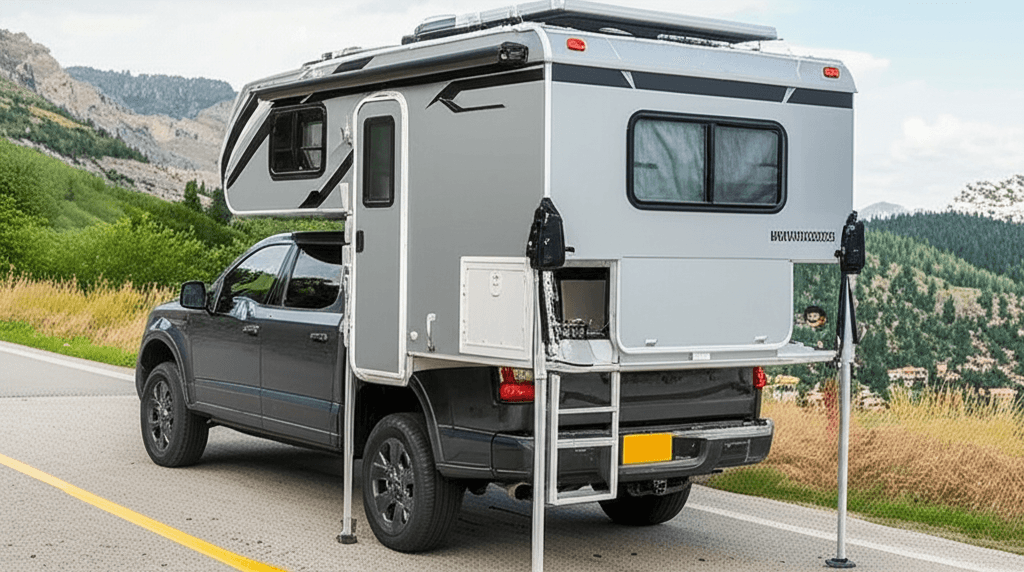
These are the most popular choice for short beds. They slide right into your truck bed. Many have a soft-top or pop-up roof that you raise once you’re parked, giving you more headroom and space inside. When they’re down, they’re more compact for driving.
- Pros:
- Designed to fit truck beds specifically.
- Great balance of features and compactness.
- Many models offer kitchenettes, sleeping areas, and even small bathrooms.
- Lower profile when traveling.
- Cons:
- Setup and takedown required each time you stop.
- Can be more expensive upfront than a basic tent setup.
- Interior living space, while functional, is smaller than larger RVs.
2. Topper Campers / Truck Shells with Integrated Features
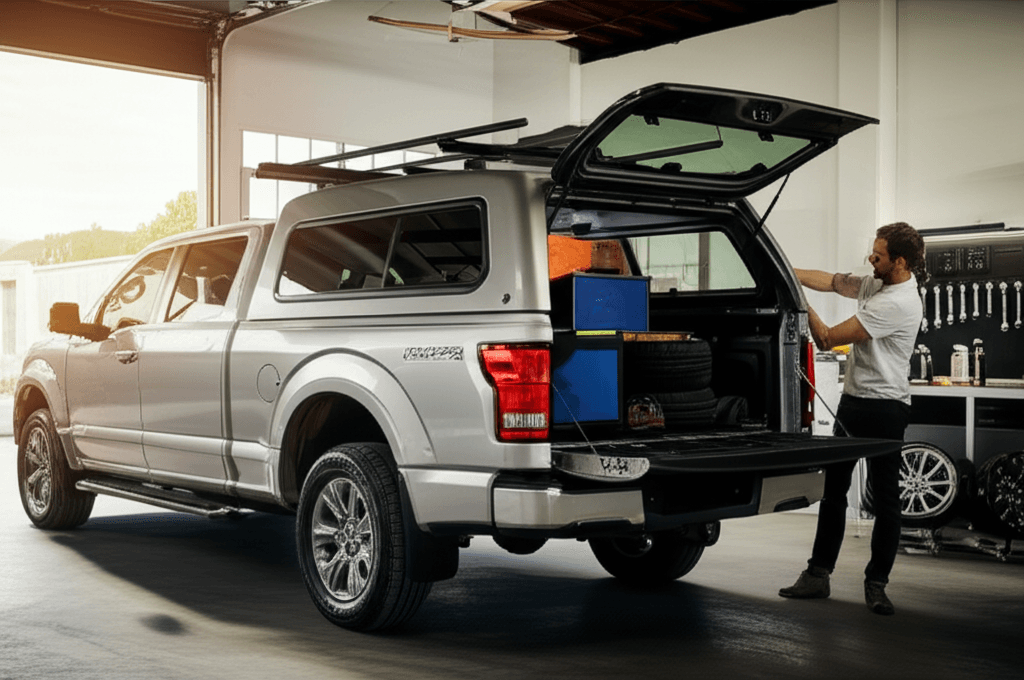
Think of a high-quality truck cap (or “topper”) but with built-in sleeping platforms, storage drawers, and sometimes even tiny galley kitchens. These are a great option if you want a simpler setup that still allows for comfortable overnight stays. They often offer a more integrated look with your truck.
- Pros:
- Simple to install and often permanently attached.
- Excellent for secure storage.
- Can be a more budget-friendly option.
- Provides shelter and a basic sleeping platform.
- Cons:
- Limited head height; you’ll likely be sitting up or sleeping, not standing.
- Fewer amenities compared to pop-up truck bed campers.
- No dedicated living area beyond sleeping/storage.
3. Custom Bed Builds
This is where you get creative! Some adventurous folks build their own campers or sleeping platforms directly into their truck beds. This could involve building a wooden frame for storage and a mattress, adding a small tent system, or even a more elaborate DIY pop-up.
- Pros:
- Completely customizable to your needs and budget.
- Can be a very cost-effective route.
- Learn valuable DIY skills.
- Cons:
- Requires significant time, effort, and DIY skills.
- May not have the professional finish or features of manufactured units.
- Resale value might be lower.
Key Features to Consider for Your 5.5-Foot Truck Bed Camper
When you’re choosing a camper for your 5.5-foot truck bed, think about what you really need versus what’s just a nice-to-have. Here are some important things to keep in mind:
1. Fit and Dimensions
This is the most crucial part! A 5.5-foot bed has specific dimensions. You’ll need to measure your truck bed’s width (from inside wall to inside wall), length (from tailgate to back of the cab), and height from the bed rails to the top of the cab. Most truck campers are listed with their dimensions, and manufacturers usually specify which truck bed lengths they fit.
Pro Tip: Always double-check the specs! Sometimes “short bed” can mean different lengths, and your specific truck model might have slight variations. Look for campers advertised for “standard short bed” or “5.5 ft bed.”
2. Weight
Your truck has a Gross Vehicle Weight Rating (GVWR), which is the maximum weight it can safely handle. This includes the weight of passengers, fuel, cargo, and the camper itself. A truck bed camper adds significant weight. Check the camper’s dry weight (without water, propane, etc.) and add an estimate for your gear. Make sure your truck’s payload capacity is sufficient. You can usually find your truck’s payload capacity on a sticker inside the driver’s side door jamb.
For example, a full-size pickup with a 5.5-foot bed often has a payload capacity ranging from 1,500 lbs to over 3,000 lbs, depending on the truck’s configuration (engine, drivetrain, cab style). Lighter campers are generally safer for your truck’s suspension and handling.
3. Features and Amenities
What makes a camper comfortable for you?
- Sleeping Area: Most will have a dedicated bed. How comfortable is it? Is there enough headroom to sit up?
- Kitchenette: Do you want a sink, a stove, or a small refrigerator?
- Bathroom: Some campers include a portable toilet, a cassette toilet, or even a small wet bath (toilet and shower combined).
- Storage: Where will you put your clothes, food, and gear? Look for clever storage solutions.
- Power: Will it run on your truck’s battery, a separate deep-cycle battery, or will you need shore power (plugging into an external source at a campsite)?
- Water System: Some have onboard tanks for fresh and gray water.
- Insulation and Heating: Important if you plan to camp in cooler weather.
4. Installation and Removal
How easy is it to get the camper in and out of your truck? Many truck bed campers use a system of tie-downs and turnscrews to secure them. If you plan to remove the camper often to use your truck for other things, look for models that are relatively quick and easy to manage. Some require specific mounting kits.
5. Durability and Construction
Truck campers are exposed to the elements and vibrations from driving. Look for solid construction, quality materials, and good seals to prevent leaks. Reading reviews from other owners can give you a good idea of how well a camper holds up over time.
Choosing the Right Camper: A Step-by-Step Approach
Ready to find your perfect match? Follow these steps to make an informed decision:
- Determine Your Budget: Truck campers can range from a few hundred dollars for basic DIY setups to tens of thousands for fully equipped, luxury models. Set a realistic budget early on.
- Assess Your Truck’s Capabilities:
- Measure your truck bed accurately (length, width, height).
- Check your truck’s payload capacity. Knowing this will help you rule out campers that are too heavy.
- Prioritize Your Needs:
- What’s your camping style? Weekend warrior, long-term explorer, minimalist, or comfort seeker?
- What amenities are non-negotiable (e.g., a real bed, kitchenette, toilet)?
- How many people will be sleeping in it?
- Research Specific Models:
- Look for campers explicitly designed for 5.5-foot or standard short truck beds.
- Read reviews and watch video tours of different models.
- Visit RV shows or dealerships to see campers in person if possible.
- Consider Used Options:
- Buying used can save a significant amount of money. Thoroughly inspect any used camper for damage, leaks, and functionality before purchasing. Check out online marketplaces like Craigslist, Facebook Marketplace, and dedicated RV sale sites.
- Factor in Installation Costs/Kits:
- Some campers require specific tie-down systems or turnbuckles. Make sure you account for these potential additional costs.
- Test Fit (if possible):
- If you’re buying locally, or if the seller is amenable, try to physically place or even install the camper on your truck to ensure a proper fit. This is especially important for custom builds or unique models.
Popular Camper Brands and Considerations for Short Beds
While many brands offer campers, not all are ideal for a 5.5-foot bed without some careful selection. Here are a few brands and types to look out for, and general considerations:
When searching, you’ll often find manufacturers list compatible bed lengths. For a 5.5-foot bed, you’ll generally be looking at campers specifically advertised as for “short bed” trucks, or those with dimensions clearly indicated as fitting this length.
Newer, Compact Models
Many manufacturers have recognized the demand for campers on shorter, more common truck beds. This has led to the development of more compact versions of their popular models or entirely new lines designed for this purpose.
Pop-Up Campers for Short Beds
Brands like FWC (Four Wheel Campers), Alaskan Camper, and Hallmark RV often offer pop-up models that can be adapted or are designed to fit shorter beds. These are known for their ruggedness and ability to go off-road.
For example, a model like the Four Wheel Camper’s Fleet or Project M, depending on the specific configuration, can be a great fit. They emphasize lightweight construction and robust build quality.
Basic Truck Shell Campers
For a more minimalist approach, companies like ARE (SnugTop, A.R.E. Truck Caps & Covers) or Leer offer high-quality truck caps that can be outfitted with custom sleeping platforms and storage. While they don’t have the amenities of a full camper, they provide excellent security and a dry place to sleep. Websites like Truck Camper Adventure often review different models and brands suitable for various truck sizes.
DIY Integration with Truck Caps/Tonnes
Some innovative solutions involve combining a truck cap with a custom-built bed platform. This might include fold-out beds, slide-out drawers for storage, and even small pop-up roof sections. You can find inspiration and DIY guides on forums and dedicated overland build sites.
| Camper Type | Pros for 5.5′ Bed | Cons for 5.5′ Bed | Typical Price Range (New) |
|---|---|---|---|
| Compact Pop-Up Truck Bed Camper | Designed for short beds, good headroom when popped, full amenities available. | Requires setup/takedown, adds significant weight. | $15,000 – $30,000+ |
| Topper with Sleeping Platform | Simple, secure, generally lighter, integrated look. | Limited interior space/headroom, fewer amenities. | $1,000 – $5,000+ (for cap + platform) |
| DIY Custom Build | Fully customizable, cost-effective if skilled, lightweight possible. | Time-consuming, skill-dependent, potential for error. | $500 – $10,000+ |
Installation and Safety Tips
Getting your camper safely installed is just as important as choosing the right one. Here’s how to do it right:
1. Read the Manual!
Seriously, this is the most important step. Every camper comes with specific instructions for installation, tie-downs, and operation. Don’t guess; follow the manufacturer’s guide.
2. Secure Tie-Downs are Crucial
Your camper needs to be firmly secured to your truck bed. This usually involves:
- Turnbuckles: These connect the camper’s tie-down points to the truck’s frame.
- Tiedown Points: Ensure your truck bed has robust tie-down points. If not, you may need to have some professionally installed. Using the flimsy tie-down rings sometimes found in the bed floor isn’t sufficient for a heavy camper. Look for strong anchor points that connect to the truck’s frame.
- Proper Placement: Distribute the tie-downs evenly to prevent shifting.
The National Highway Traffic Safety Administration (NHTSA) highlights the importance of properly secured loads for vehicle stability. An improperly secured camper can lead to dangerous accidents.
3. Check Weight Distribution
Try to load heavier items towards the front of the camper and lower down. This helps maintain proper weight distribution over your truck’s axles, improving handling and stability. Avoid overloading.
4. Test Drive
After installation, take a short, slow test drive around your neighborhood. Listen for any unusual noises, feel for any wobbling, and check that the camper remains securely in place. Gradually increase speed and test on different road types if needed, but always be cautious.
5. Consider a Backup Camera or Sensors
A camper significantly increases the blind spots on your truck. A backup camera or parking sensors can be invaluable for maneuvering and parking safely.
6. Electrical Connections
If your camper has lights, a fridge, or other electrical components that connect to your truck, ensure these connections are secure and properly wired. Consult your truck’s manual or a professional if you’re unsure.
Living and Maintaining Your Truck Bed Camper
Once your camper is on your truck and ready to go, a little care will go a long way in ensuring it’s a reliable companion for your adventures.
1. Regular Cleaning
Keep both the interior and exterior clean. Wash the camper regularly, especially after trips in dusty or muddy conditions. Inside, clean up spills, sweep floors, and keep things tidy to prevent mold and mildew.
2. Check for Leaks
Periodically inspect seals around windows, doors, and roof vents. Water is the enemy of RVs. If you find any signs of leaks, repair them promptly. Look for water stains, soft spots in the flooring or walls, or peeling sealant.
3. Winterization
If you live in an area with freezing temperatures, you’ll need to winterize your camper. This involves draining all water systems (tanks, pipes, water heater) and pumping a non-toxic RV antifreeze through the lines to prevent them from freezing and cracking. Refer to your camper’s manual for specific winterization steps.
Resources like RV Travel offer detailed guides