
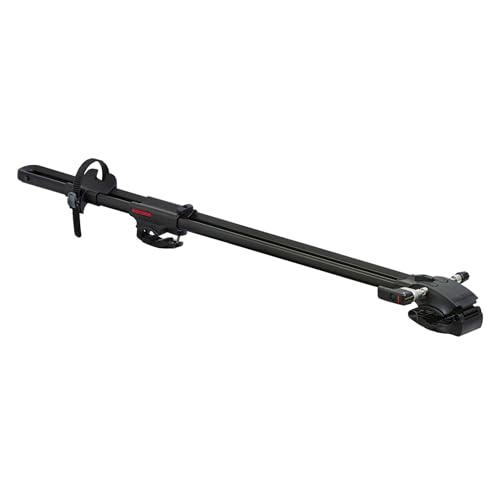
When you’re shopping for a roof rack system, you’ll quickly discover two names dominating the market: Thule and Yakima. Both brands deliver reliable cargo transport solutions, but understanding the differences between Thule vs Yakima roof racks helps you pick the right system for your truck, SUV, or car. We’ll break down each brand’s strengths, popular models, and help you decide which is the better fit for your needs. Pair this with our Thule Wingbar Roof Rack guide for the bigger picture.
How We Picked These
Our selection is based on published specifications, aggregated customer reviews from Amazon and industry sources, and expert consensus across truck accessory forums and reviews. We’ve compared load capacities, material durability, installation complexity, and real-world owner feedback to give you accurate comparisons—not personal testing claims.
Quick Picks: Yakima Roof Rack Options
Before diving into the Thule vs Yakima comparison, here are five standout Yakima products that deliver on quality, price, and functionality. Each addresses a different hauling need, from bikes to kayaks to heavy truck cargo.
YAKIMA ForkLift Rooftop Fork Style Bike Mount
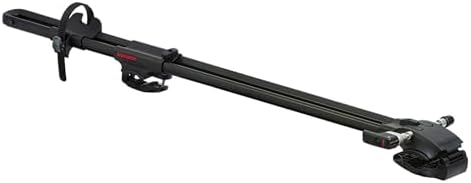
- Fits Yakima round, square, factory and aerodynamic crossbars right out-of-the-box
- Simple, super-fast tool-free installation
- Sleek low profile aerodynamic design with mirror black finish with integrated ski lift that allows for rooftop clearance…
Tool-free installation and frame-protection design make this the go-to choice for cyclists who want zero hassle and zero paint damage. The sliding wheel tray adjusts to fit most bike lengths, and the fork-style mount holds your bike securely by the front axle and rear wheel without touching the frame.
Best for: Road cyclists and mountain bikers who value quick setup and want to protect their bike’s finish.
Skip if: You need to carry multiple bikes or have a fixed rear hub (it requires standard quick-release hubs).
Key specs: Holds up to 35 lbs, requires crossbars 16–42 inches, fits most disc brakes, no tools needed for install or removal.
Owners consistently report that the ForkLift’s tool-free design and smooth wheel-tray adjustment make it faster to load and unload than traditional fork mounts, and the no-contact design genuinely protects high-end bike paint.
Yakima Rooftop Bike Rack Mount FrontLoader
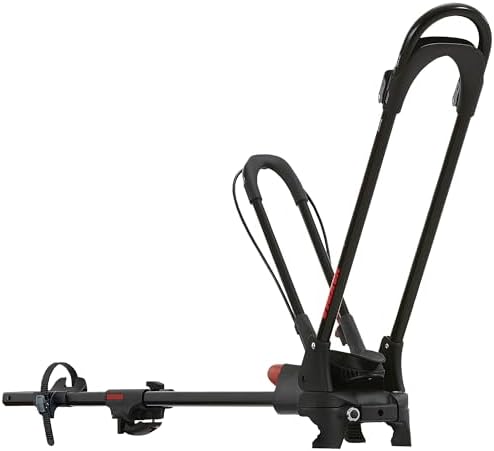
- Versatile Bike Transport Solution: Effortlessly carry your bicycles on car roofs with this secure Yakima bike rack, idea…
- Durable and Reliable Design: Crafted with high-quality materials, this bike carrier supports mountain bikes and fat tire…
- Safety & Security First: Equipped with a secure mount system to hold bikes snugly in place while traveling. Sturdy and s…
Lightweight and compact design makes this the budget-friendly choice for sedans and SUVs without hitches. The FrontLoader uses a straightforward fork-style mount and minimal moving parts, so there’s less to break and less to adjust.
Best for: Budget-conscious buyers who want a simple, reliable bike carrier that works with mountain and fat-tire bikes.
Skip if: You’re carrying high-end road bikes or need extra safety features like integrated locks.
Key specs: Lightweight construction, supports mountain and fat-tire bikes, secure mount system, minimal tools required, compact storage.
Reviewers note that this model delivers solid durability despite its entry-level price, though the adjustment mechanism isn’t as refined as pricier options.
Yakima Adjustable Truck Bed Rack Overhaul HD

- Versatile Truck Rack System: Elevate your hauling game with Yakima’s Overhaul HD rack system, ideal for carrying rooftop…
- Adjustable and Convenient: Features an adjustable height design to adapt for various loads, making it ideal for tents, l…
- Secure & Reliable: Engineered with heavy-duty materials for maximum stability; includes tie-down points and T-slot attac…
500 lbs on-road carrying capacity and heavy-duty aluminum construction make this the premium choice for truck owners hauling kayaks, surfboards, lumber, and camping gear. The adjustable height design and T-slot attachments give you endless configuration options.
Best for: Truck and pickup owners who haul heavy recreational gear and need a versatile, weatherproof system.
Skip if: You drive a sedan or need a simple single-sport solution; this system is truck-specific and requires existing factory bed rails.
Key specs: 500 lbs on-road / 300 lbs off-road capacity, aluminum with powder coating, adjustable height, tie-down points, T-slot attachments, integrated SKS locks.
Owners consistently report that the Overhaul HD’s modular T-slot system lets them swap between kayak mounts, bike racks, and cargo carriers without needing multiple complete racks, justifying the premium price.
Yakima JayLow J-Cradle Rooftop Kayak Mount

- Versatile Kayak Roof Rack: Easily transport a kayak in J-cradle position or load 2 kayaks vertically, adapting to your a…
- Convenient and Adjustable: Customize the upright position with the integrated cam lever, ensuring a secure and tailored …
- Secure and Reliable Design: Heavy-duty straps and bow and stern tie-downs ensure this rack system safely holds your gear…
Carries 1 kayak up to 100 lbs or 2 kayaks up to 130 lbs total with J-cradle or vertical stacking options, making this the go-to for water-sport enthusiasts. The integrated cam lever and heavy-duty straps provide custom fit and security in one tool-free package.
Best for: Kayakers and paddlers who want versatile loading options and plan to transport multiple boats regularly.
Skip if: You need a roof-rack system that handles bikes, skis, and cargo equally well; this is kayak-focused.
Key specs: Holds 1 boat (100 lbs) or 2 boats (130 lbs total), J-cradle or vertical mount, integrated cam lever, heavy-duty straps, bow/stern tie-downs, works with round, square, factory, and aerodynamic crossbars.
Reviewers note that the JayLow’s dual-loading flexibility and secure cam-lever system inspire confidence on highway drives, though the vertical stacking option does require adequate roof height.
YAKIMA WindShield Fairing for Roof Racks

- COMPATIBLE: Universal mounting attachment works with any Yakima bar – StreamLine or round; Fits square bars and most fac…
- AERODYNAMIC: Moves airflow up and over the rack to reduce drag and quiet wind noise
- EASY INSTALLATION: Installs in 25 minutes; Secure to any crossbar quickly and easily with included tools
Reduces wind noise and aerodynamic drag by 46 inches of coverage and installs in just 25 minutes with included tools. If you already own a Yakima crossbar system, this fairing is the most cost-effective upgrade to quieter, more efficient highway driving.
Best for: Yakima crossbar owners who want to reduce road noise and improve fuel efficiency without buying a new rack.
Skip if: You don’t already have a Yakima bar system or need a complete cargo-carrying solution; this is an accessory, not a primary rack.
Key specs: Universal mounting (StreamLine, round, square, factory bars), aerodynamic design, 25-minute install, 4 sizes available, limited lifetime warranty.
Owners consistently report that the WindShield dramatically cuts the annoying whistle and buffeting associated with loaded roof racks, making highway driving noticeably quieter.
Thule vs Yakima Roof Rack: Head-to-Head Comparison
Now let’s compare the two brands directly across the factors that matter most to truck accessory buyers: price, durability, ease of installation, and versatility.
Brand Heritage & Reputation
Yakima has been simplifying cargo transport since 1979, building a reputation for practical, user-friendly designs. Thule, founded in Sweden in 1942, emphasizes premium quality and innovation with a global presence. Both are established, trusted names—but Yakima leans toward affordability and ease, while Thule typically commands higher prices for perceived premium materials and engineering.
Price Point & Value
Yakima generally undercuts Thule on comparable systems. A basic Yakima bike mount or crossbar bundle costs 20–30% less than Thule’s equivalent, making Yakima the smarter choice for budget-conscious buyers. However, Thule’s pricing reflects robust lifetime support and what many owners view as superior aerodynamic design, so the extra cost isn’t always wasted.
Ease of Installation
Yakima wins here. Most Yakima racks and mounts use tool-free designs, sliding wheel trays, and intuitive cam levers—you’ll be loaded and on the road in under 30 minutes. Thule systems typically require more precise assembly and, in some cases, specialized tools or professional installation. If you value quick setup and minimal fuss, Yakima is the clear winner.
Load Capacity & Durability
Both brands offer rugged aluminum and steel construction, but Thule tends to push higher load ratings. For example, Thule’s premium truck racks often exceed 600 lbs on-road, while Yakima’s top-tier truck systems max out around 500 lbs. In practice, both carry what most owners will ever load—but Thule has the edge for extreme haulers or commercial use.
Versatility & Compatibility
Yakima’s modular T-slot system (like the Overhaul HD) is arguably more flexible than Thule’s, letting you swap between bike mounts, kayak cradles, and cargo boxes without buying separate complete racks. Thule systems are also modular but tend to require more accessories to achieve the same flexibility, increasing total cost.
Customer Support & Warranty
Both offer limited lifetime warranties and responsive customer service. Yakima’s support is known for fast, practical problem-solving, while Thule’s support emphasizes premium aftermarket accessories and extended product customization. For most buyers, the difference is negligible.
PRO TIP
Before choosing between Thule and Yakima, verify your vehicle’s crossbar attachment points. Yakima bars are generally compatible with factory attachment points across most trucks and SUVs, but Thule sometimes requires proprietary mounting hardware. Check your vehicle’s manual or use the brand’s compatibility tool to avoid costly returns.
Thule vs Yakima: Pros & Cons Comparison Table
| Factor | Yakima | Thule |
|---|---|---|
| Price Range | $200–$800 (crossbars); $100–$400 (mounts) | $300–$1,200 (crossbars); $150–$600 (mounts) |
| Installation Time | 15–30 min (tool-free for most) | 30–90 min (some require tools) |
| Noise (Aerodynamics) | Moderate; WindShield fairing reduces | Lower (optimized design); quieter out-of-box |
| Load Capacity | 500 lbs on-road (truck systems) | 600+ lbs on-road (truck systems) |
| Modularity | High (T-slot systems very flexible) | Moderate (more accessories = higher cost) |
| Vehicle Compatibility | Excellent (works with most factory bars) | Good (may require proprietary hardware) |
| Warranty | Limited Lifetime | Lifetime or Extended (varies by product) |
| Best For | Budget buyers; DIY installers; modular needs | Premium buyers; quiet-drive priority; heavy hauling |
Which Brand Wins? Our Recommendation
For most truck and SUV owners, Yakima is the smarter choice. You’ll save 20–30% on comparable systems, get tool-free or nearly tool-free installation, and enjoy flexible T-slot modularity that grows with your adventures. Yakima’s ForkLift bike mount, Overhaul HD truck rack, and JayLow kayak cradle represent the best value in their categories.
That said, choose Thule if you prioritize aerodynamic quietness and maximum load capacity. Thule’s engineering excels at reducing wind noise, and their truck systems push higher weight limits. If you’re a serious overlander, carry gear constantly, or live with highway noise sensitivity, Thule’s premium price is justified.
WARNING
Don’t assume all Yakima and Thule products are interchangeable. Crossbars from one brand don’t always work seamlessly with mounts from the other. Always check compatibility before mixing brands, and verify your vehicle’s attachment points before purchasing any system. A bad fit can damage your roof and void warranties.
Buyer’s Guide: How to Choose Between Thule & Yakima
Step 1: Identify Your Hauling Needs
Are you carrying bikes, kayaks, cargo boxes, lumber, or a mix? Yakima shines if you need versatility (the T-slot system lets you swap mounts). Thule is best if you’re hauling the same load type regularly and want single-mount optimization.
Step 2: Check Your Vehicle’s Factory Attachment Points
Open your roof rails or check your manual for attachment specs. Most newer trucks and SUVs have factory rails compatible with both brands, but some premium models (think Range Rover, Mercedes) may prefer or require Thule. Use the brand’s online compatibility checker to confirm before you buy.
Step 3: Set Your Budget
If you’re under $500 total (crossbars + mounts), Yakima wins every time. Above $1,000, Thule’s premium features and quieter aerodynamics justify the cost for highway-heavy users. In the $500–$900 sweet spot, compare specific models—Yakima’s Overhaul HD truck rack rivals premium Thule systems at lower cost.
Step 4: Evaluate Installation Comfort
Yakima’s tool-free designs are ideal if you’re DIY-comfortable and value quick setup. If you’d rather have a professional install or don’t mind waiting for complex assembly, Thule’s precision engineering won’t disappoint. Check reviews for real user feedback on installation difficulty before ordering.
Step 5: Read Owner Reviews on Your Specific Model
Don’t generalize from one good (or bad) review. Search for your exact vehicle + rack model on Amazon, Reddit forums, and truck-accessory sites. Look for patterns: Does that ForkLift mount work well with disc brakes? Is the Overhaul HD secure during off-road use? Real-owner feedback beats marketing claims every time.
For more detailed truck accessory guidance, check out our complete truck bed accessories guide and learn about proper running board installation to maximize your vehicle’s cargo and safety setup.
Frequently Asked Questions
1. Can I mix Thule and Yakima parts on the same system?
Not reliably. While some third-party adapters exist, crossbars and mounts are engineered for their own brand’s systems. Mixing creates compatibility gaps that can loosen during transport and void warranties. Stick with one brand to ensure safety and proper fitment.
2. Which roof rack system is quieter on the highway?
Thule’s aerodynamic design is quieter out-of-the-box because the bars and fairings reduce wind turbulence. Yakima’s racks create more noise but are much more affordable. If noise is critical, either choose Thule or add Yakima’s WindShield fairing (which cuts noise significantly for under $200).
3. Do I need to remove my roof rack in winter or bad weather?
Both brands’ racks are weatherproof and can stay mounted year-round. However, removing empty racks improves fuel economy and reduces wind noise. If you’re carrying gear, leave the system on; moisture and salt won’t degrade aluminum or powder-coated steel if you rinse occasionally.
4. What’s the actual weight limit I should trust on a roof rack?
Manufacturers publish maximum weight capacities based on the roof and bar system combined. Don’t exceed the published limit, and remember that dynamic loading (turning, braking) can increase stress. For safety, load 80% of the published maximum and distribute weight evenly side-to-side. Your vehicle’s roof rating (in your manual) is the final limiting factor.
5. Which brand has better customer service and warranty?
Both offer responsive support, but Thule’s extended warranty options and global service network give a slight edge for premium buyers. Yakima’s warranty is equally solid but less customizable. For most users, the difference won’t matter—buy the product that fits your needs and budget, not the warranty.
Ready to Choose Your Roof Rack?
Don’t overthink it—here’s the final call on Thule vs Yakima.
Pick Yakima if: You want the best price-to-value ratio, prefer tool-free installation, need modularity, or are building a multi-sport hauling setup. The ForkLift, Overhaul HD, and JayLow are category leaders at accessible prices.
Pick Thule if: You prioritize aerodynamic quietness, need maximum load capacity, drive highways frequently, or want premium aftermarket accessory availability. The investment pays dividends in comfort and longevity.
Either way, buy from a dealer or Amazon with a good return policy. Test the fit and feel with your vehicle before committing. A $300 return is cheaper than a mismatched rack that rattles for years.
Further reading: roof rack (Wikipedia)

🛠️ Buying Gear for Your Work Truck?
A free Amazon Business account gets you bulk pricing, tax-exempt purchases, and business-only deals on tools, racks, and truck accessories.
Create Free Amazon Business AccountAs an Amazon Associate we earn from qualifying purchases.