
Have you ever wondered if your pallet racks are as safe as they should be? Even small damages can lead to big problems—like accidents, costly repairs, or lost inventory.
The good news is, checking for damage doesn’t have to be complicated. With the simple 1-2-3 Rule, you can quickly spot issues before they become serious. Keep reading, and you’ll learn exactly how to inspect your pallet racks step-by-step, protect your warehouse, and save time and money.
Don’t let hidden damage catch you off guard—this guide is made just for you.
The 1-2-3 Rule Basics
The 1-2-3 Rule Basics offers a clear method to check pallet rack damage. This rule helps workers spot problems quickly and keep the warehouse safe. It simplifies the inspection process into three easy steps. Each step guides you to look for specific types of damage. Following this rule can save time and prevent accidents.
Key Principles
The 1-2-3 Rule focuses on three main points. First, check the uprights for dents or bends. Second, inspect the beams for cracks or breaks. Third, look at the braces and connectors for loose or missing parts. These points cover the most common damage areas. The rule sets simple limits on damage size. For example, dents larger than 1 inch or bends over 2 inches need attention. This helps workers decide when to repair or replace parts.
Why It Matters
Following the 1-2-3 Rule keeps the rack strong and safe. Damaged racks can collapse and cause injuries. Early damage detection prevents costly repairs and downtime. It also ensures that stored items stay secure. A safe warehouse protects workers and goods. Using this rule makes inspections quick and easy. Everyone can learn and apply it without special training.
Step 1: Visual Check
Step 1: Visual Check is the first and most important part of inspecting pallet rack damage. This step helps you find any problems quickly. A careful look can keep your warehouse safe and avoid big repairs later.
Identifying Obvious Damage
Start by looking for clear signs of damage. Check beams and uprights for bends, cracks, or dents. Look at the joints and connections for loose or missing bolts. Any signs of rust or corrosion also matter. These issues can weaken the rack and cause accidents.
Focus on areas where forklifts or pallets may have hit the racks. Scratches and chipped paint may show impact points. Mark damaged spots for repair or further inspection. This keeps the rack strong and safe.
Spotting Hidden Issues
Some damage is not easy to see at first glance. Look behind beams and under shelves for hidden cracks. Check for small bends or warping in metal parts. These can grow into bigger problems over time.
Use a flashlight to see dark corners and tight spaces. Pay attention to the floor around the rack for uneven spots or damage. These may affect the rack’s stability. A careful visual check helps catch problems early and keeps the warehouse secure.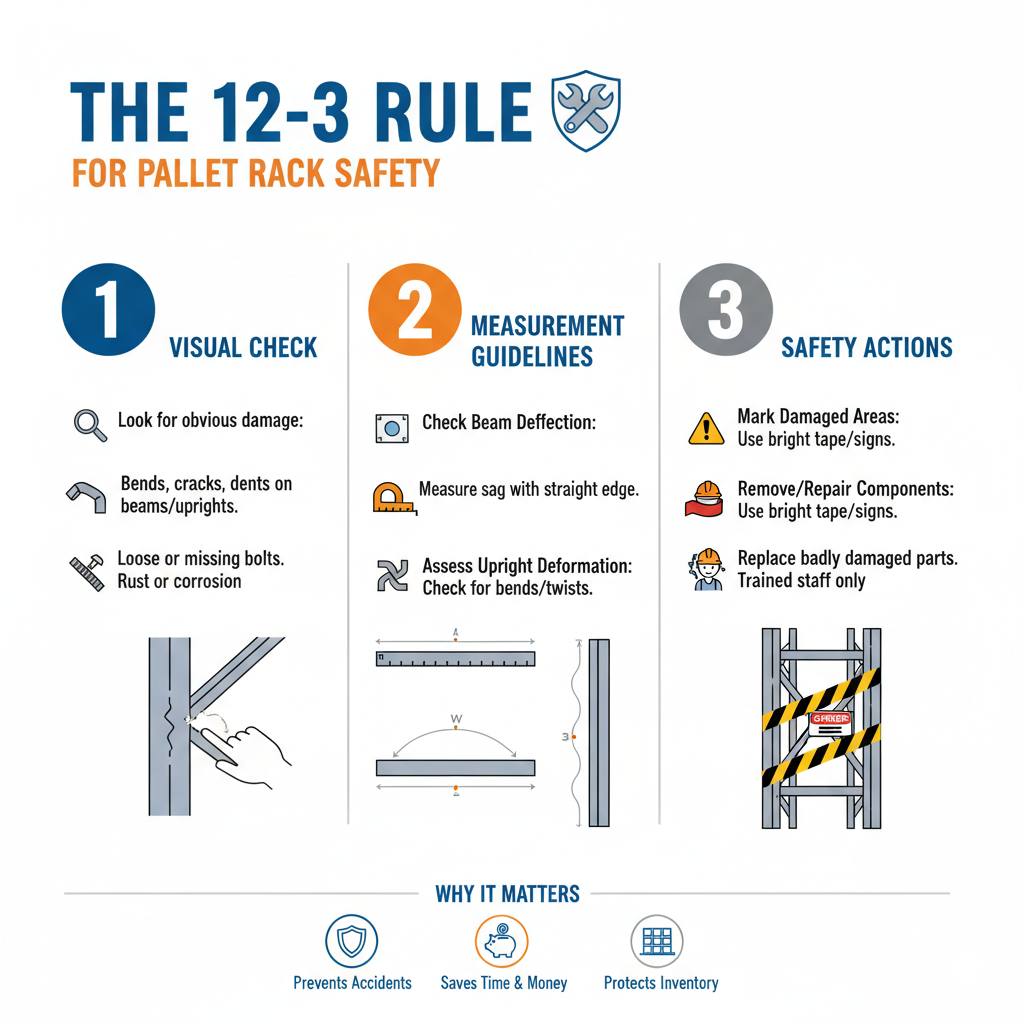
Step 2: Measurement Guidelines
Step 2 focuses on measuring damage to your pallet racks. Accurate measurements help decide if repairs or replacements are needed. Use simple tools like tape measures and straight edges. Measure carefully to detect even small damages that can grow over time.
Checking Beam Deflection
Beam deflection means the beam bends down under weight. Measure the beam’s curve by comparing it to a straight line. Use a level or straight edge across the beam. Note how far the beam sags in the middle. A small bend may be safe, but large bends are dangerous. Replace or repair beams that bend too much.
Assessing Upright Deformation
Upright deformation means the vertical supports are bent or twisted. Use a tape measure to check if the upright is straight. Measure the width and depth at several points. Look for bulges or bends that change the shape. Deformed uprights weaken the whole rack. Mark any deformation and plan repairs quickly.
Step 3: Safety Actions
Step 3: Safety Actions is crucial in the 1-2-3 Rule for inspecting pallet rack damage. This step helps keep the warehouse safe and prevents accidents. It focuses on clear marking and fixing or removing damaged parts quickly.
Marking Damaged Areas
Mark damaged areas clearly to warn workers. Use bright tape or signs near the damage. This stops people from using weak racks by mistake. Marking makes the problem visible from a distance. It helps supervisors track repairs and keep the site safe.
Removing Or Repairing Components
Remove badly damaged parts right away. These parts cannot hold weight safely anymore. Repair small damages fast to avoid bigger problems. Use proper tools and follow repair guidelines. Only trained staff should do these repairs. This keeps the pallet racks strong and safe for use.
Tools For Fast Inspection
Inspecting pallet rack damage quickly helps keep warehouses safe. Using the right tools speeds up the process. It also improves accuracy. This section covers the best tools for fast inspection.
Essential Equipment
A strong flashlight helps spot cracks and dents clearly. A tape measure checks if racks are bent out of shape. A camera or smartphone records damage for reports. A clipboard or digital form keeps notes organized. Safety gear like gloves and helmets protects during inspection.
Using Technology
Mobile apps help track rack conditions over time. Barcode scanners identify rack locations fast. Drones can inspect high or hard-to-reach racks safely. Digital cameras with zoom capture details without close contact. Software tools create damage reports quickly and share them easily.
Common Damage Types
Pallet racks face many types of damage over time. Knowing common damage types helps spot problems early. Early detection keeps your warehouse safe and efficient. Below are two main types of pallet rack damage you must check for regularly.
Impact Damage
Impact damage happens when forklifts or pallets hit the racks. It often bends or cracks the metal beams. These dents weaken the rack’s strength and can cause collapse. Look for scratches, dents, or bent parts on beams and uprights. Even small hits can grow into big problems if ignored.
Corrosion And Wear
Corrosion occurs from moisture and chemicals in the warehouse. Rust slowly eats away the metal, making it brittle. Wear happens from constant use and friction on beams and braces. Both reduce the rack’s load capacity. Check for rust spots, flaking paint, and worn metal parts. Clean and treat these areas to prevent further damage.
Preventing Pallet Rack Damage
Preventing pallet rack damage is key to keeping warehouses safe and efficient. Damaged racks can cause accidents and slow down work. Taking steps to stop damage saves money and time. It also helps protect workers and goods.
Training Workers
Teach workers how to handle racks carefully. Show them the right ways to load and unload pallets. Explain the risks of hitting racks with forklifts. Make safety a daily habit. Regular training keeps everyone alert and cautious. Clear rules reduce careless mistakes that cause damage.
Regular Maintenance
Check racks often for dents, bends, or cracks. Fix small problems before they get worse. Tighten loose bolts and replace broken parts. Keep the area clean and clear of debris. Use a checklist to track inspections. Well-maintained racks last longer and stay safer.
When To Call A Professional
Knowing when to call a professional for pallet rack damage is vital for safety. Some damages look small but can cause big problems later. A professional can spot hidden risks and prevent accidents. They bring experience and tools to assess the damage correctly. This step keeps your warehouse safe and your racks strong.
Signs Of Serious Damage
Look for bends or cracks in beams and uprights. Warped or twisted parts show heavy impact. Missing bolts or loose connections can weaken the rack. Rust or corrosion may hide deeper problems. If damage affects the rack’s stability, call a pro immediately. Safety must come first.
Choosing An Expert
Pick someone with experience in pallet rack inspections. Check if they have proper certifications and insurance. A good expert explains the damage clearly and offers solutions. Choose a professional who works quickly and respects your schedule. Their advice helps protect your goods and employees.

- Operate Efficiently Like Never Before: With the power of Copilot AI, optimize your work and take your computer to the ne…
- Keep Your Flow Smooth: With the power of an Intel CPU, never experience any disruptions while you are in control.
- Adapt to Any Environment: With the Anti-glare coating on the HD screen, never be bothered by any sunlight obscuring your…
Frequently Asked Questions
What Is The 1-2-3 Rule For Pallet Rack Inspection?
The 1-2-3 Rule helps quickly spot pallet rack damage by checking beams, uprights, and braces for dents or bends. It ensures safety by identifying issues before accidents happen.
How Often Should I Inspect Pallet Racks Using The 1-2-3 Rule?
Inspect pallet racks monthly or after any impact using the 1-2-3 Rule. Regular checks prevent damage escalation and maintain workplace safety.
What Types Of Damage Does The 1-2-3 Rule Detect?
The 1-2-3 Rule detects bends, dents, cracks, and misalignments in rack components. Early detection helps avoid costly repairs and potential collapses.
Who Should Perform The 1-2-3 Pallet Rack Inspection?
Trained warehouse personnel or safety inspectors should perform the 1-2-3 inspection. Proper training ensures accurate damage identification and compliance with safety standards.
Conclusion
Regularly check your pallet racks using the 1-2-3 Rule. Spotting damage early keeps your warehouse safe and organized. Small problems can grow if ignored. Quick inspections save time and money. Train your team to follow these easy steps. Stay safe, avoid accidents, and protect your goods.
Simple checks make a big difference every day. Keep your racks strong and your work smooth. Safety starts with a careful eye.

- The next-generation optical HERO sensor delivers incredible performance and up to 10x the power efficiency over previous…
- Ultra-fast LIGHTSPEED wireless technology gives you a lag-free gaming experience, delivering incredible responsiveness a…
- G305 wireless mouse boasts an incredible 250 hours of continuous gameplay on just 1 AA battery; switch to Endurance mode…

- Precision you can feel with the Haptic Sense Panel; customizable (1) haptic feedback on specific actions, shortcuts, not…
- Effortlessly access favorite tools with Actions Ring (2) on this MX Series mouse—a dynamic, customizable overlay adapts …
- Scroll 1,000 lines per second and stop on a pixel with the MagSpeed scroll wheel—Logitech’s fastest (3), quietest, and m…

- 2 years of battery life practically eliminates the need to replace batteries. The On/Off switch helps conserve power and…
- The tiny Logitech USB Unifying receiver stays in your laptop. There’s no need to unplug it when you move around, so ther…
- The Logitech M510 graphite wireless laptop mouse comes with a battery indicator light on the top to eliminate surprises

- Compact Mouse: With a comfortable and contoured shape, this Logitech ambidextrous wireless mouse feels great in either r…
- Durable and Reliable: This USB wireless mouse features a line-by-line scroll wheel, up to 1 year of battery life (2) tha…
- Universal Compatibility: Your Logitech mouse works with your Windows PC, Mac, or laptop, so no matter what type of compu…

- Logitech MX Master 3S Standard Edition comes with a Logi Bolt USB receiver (dongle), and a USB-C charging cable (USB-A t…
- Install free Logi Options+ App to enable Logi AI Prompt Builder for your Logitech wireless mouse and keyboard setups
- 8K DPI Any-surface tracking: Use MX Master 3S cordless computer mouse to work on any surface – even glass (1) – with an …

- HERO Gaming Sensor: Next generation HERO mouse sensor delivers precision tracking up to 25600 DPI with zero smoothing, f…
- 11 programmable buttons and dual mode hyper-fast scroll wheel: The Logitech wired gaming mouse gives you fully customiza…
- Adjustable weights: Match your playing style. Arrange up to five 3.6 g weights for a personalized weight and balance con…