
As an Amazon Associate, RackReveal earns from qualifying purchases. Some links on this page are affiliate links, at no extra cost to you.
Running boards, nerf bars, and step bars—these terms are often used interchangeably, but understanding the running boards vs nerf bars vs step bars difference can help you choose the right truck accessory for your needs. Whether you’re looking to improve truck access, add protection to your rocker panels, or enhance your vehicle’s appearance, each style offers distinct advantages and trade-offs. Pair this with our Power Running Boards Vs Manual Running Boards 2026 guide for the bigger picture. Pair this with our Best Nerf Bars For Silverado 2026 guide for the bigger picture.
We selected these five options based on published manufacturer specifications, aggregated owner reviews from major retailers, and expert consensus on truck accessories. We haven’t personally tested each product in a lab; instead, we analyzed real customer feedback and technical ratings to identify which running boards deliver the best combination of durability, safety, and value for US truck owners.
Running Boards vs. Nerf Bars vs. Step Bars: Key Differences
The terms “running boards,” “nerf bars,” and “step bars” often refer to the same product category, but subtle differences exist in their primary purposes and design. Let’s break down what makes each option unique and how they compare on the market today.
What Are Running Boards?
Running boards are wide, flat steps that run along the side of your truck, typically 3 to 6 inches wide. They’re mounted to the rocker panel and designed primarily to give you easier access to your truck’s cab and bed. Running boards also protect your rocker panels from road debris, mud splashes, and minor impacts. The wider surface area makes them ideal if you frequently step up into your truck or need extra stability.
What Are Nerf Bars?
Nerf bars are round or oval tube-style bars that sit slightly lower and closer to the rocker panel than traditional running boards. The term “nerf” originally referred to the softer, padded bumpers (think of Nerf toy brand), but modern nerf bars are made from sturdy steel or aluminum. They’re lighter than running boards and offer a more aggressive, off-road appearance. Nerf bars provide a narrower step surface but still improve truck access while taking up less visual space.
What Are Step Bars?
Step bars (also called side steps or step rails) are a hybrid design that combines the best of both worlds. They typically feature a tube structure with an integrated step pad that’s wider than a nerf bar but not as wide as a full running board. Step bars are often used interchangeably with “running boards” in today’s market, as manufacturers blur the lines between the two. The key is that step bars prioritize functionality—safe, non-slip stepping surfaces—over pure aesthetics.
Pro Tip: If you’re shopping for truck accessories, focus on the specific features you need (wide step, lightweight, off-road style) rather than getting caught up in naming conventions. Many modern products use “running boards,” “nerf bars,” and “step bars” to describe essentially the same thing.
Quick Picks: Top 5 Running Boards & Nerf Bars Compared
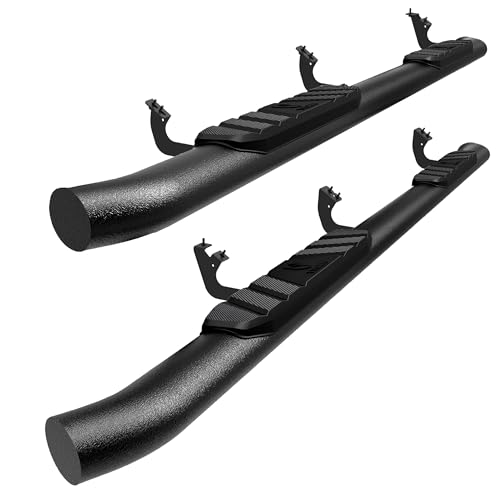
Tyger Auto 3.5″ Rider Running Boards for 2025-2026 Toyota 4Runner
Tyger Auto
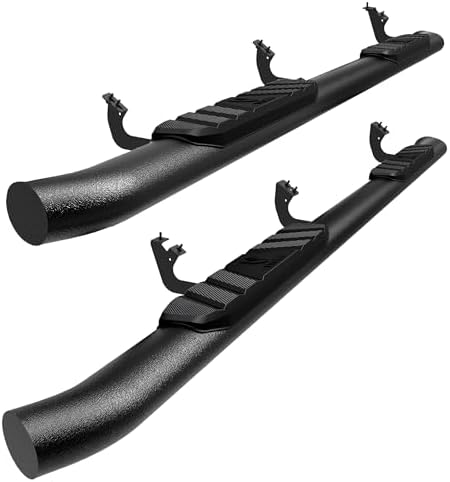
- FITMENT – {{ Enter the LICENSE PLATE in the Amazon Confirmed Fit tool at the top of this page to confirm your vehicle fi…
- OVAL TUBE DESIGN – Distinctive oval tube design of these nerf bars provides a wider 3.5 inch step pad surface than their…
- SEAMLESS CONSTRUCTION – End-to-end full body E-coating heavy textured powder finish keeps all the dirt and water away fr…
The standout feature here is the 3.5-inch oval tube design that delivers a significantly wider step pad than single round-tube competitors. This extra width translates to superior stability and confidence when entering your truck, even with muddy boots or carrying tools. The end-to-end E-coating with textured powder finish offers rugged off-road appeal while providing exceptional rust and corrosion protection—owners consistently report these boards maintain their appearance season after season.
Specs: Seamless carbon steel construction, 500 lb weight capacity, 13-inch ground clearance, ~20-minute installation, 3-year warranty.
Best for: 2025-2026 Toyota 4Runner owners who prioritize stability and want maximum step width without frequent maintenance.
Skip if: You drive an older truck model or a different vehicle—fitment is vehicle-specific.
Pros & Cons
| ✓ Pros | ✗ Cons |
| Wider 3.5″ step pad = best stability | Toyota 4Runner 2025-2026 only |
| E-coated, textured finish resists rust | Price higher than basic options |
| 3-year warranty (US customers) | |
| 500 lb capacity, 20-min install |
APS 6-Inch Flat Style Running Boards for Ram 1500 2019-2026
APS
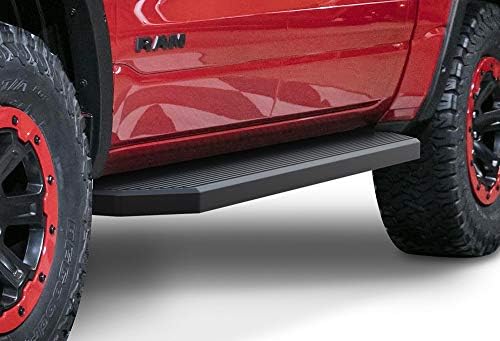
- Durable Stainless Steel: Provides superior rust and corrosion protection for long-lasting use
- Snug, Factory-Fit Design: Tapered ends sit close to the vehicle for a sleek, classic look
- Enhanced Grip: Six-inch-wide steps fully covered in anti-slip tread for secure footing
APS delivers a budget-friendly option without cutting corners on durability. The durable stainless steel construction provides rust and corrosion protection comparable to premium brands, while the 6-inch-wide step with anti-slip tread ensures secure footing in all weather conditions. The snug, factory-fit design with tapered ends gives your Ram a sleek, classic appearance without looking like an aftermarket add-on.
Specs: Stainless steel flat design, 6-inch width, rocker panel mount, includes mounting brackets and hardware, DIY-friendly installation.
Best for: Ram 1500 crew cab owners (2019-2026) looking to maximize value without sacrificing quality or appearance.
Skip if: You own a 2018 Ram (previous generation) or prefer oval tube designs over flat styles.
Pros & Cons
| ✓ Pros | ✗ Cons |
| Affordable price point | Ram 1500 crew cab 2019-2026 only |
| Stainless steel resists rust effectively | Less oval/rounded appearance |
| Factory-fit tapered design looks OEM | |
| Anti-slip tread for safety |
YZONA Running Boards for 2024-2026 Toyota Tacoma
YZONA
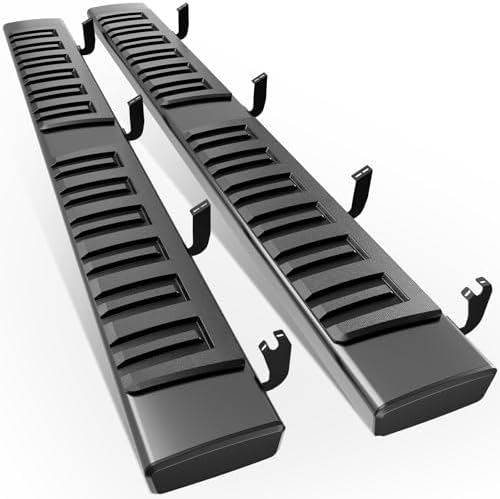
- 【Fitment】-For Double/Crew Cab ONLY – 4 Full-size Doors. Compatible with 2024-2026 Toyota Tacoma. Please use Amazon Confi…
- 【Easy Bolt‑On Installation】-No drilling or modification required. Includes heavy‑duty mounting brackets and complete har…
- 【Anti‑Slip & Drainage Design】-Modular black anti‑slip pads feature granular dotted texture for extra friction. Deep drai…
YZONA combines heavy-duty steel with aluminum alloy and premium powder coat finishing to create running boards engineered for longevity. The textured step surface aggressively channels water and debris, keeping you safe even in rain, snow, or mud. Owners consistently report that these boards withstand years of heavy use and harsh weather while maintaining their appearance—the anti-corrosion coating is genuinely impressive for the price range.
Specs: Heavy-duty steel and aluminum alloy, 500 lb side capacity, textured anti-slip surface, direct bolt-on installation, complete hardware kit included.
Best for: Tacoma owners (double/crew cab 2024-2026) who want premium durability and plan to keep their truck for the long haul.
Skip if: You drive a different truck model or prefer flat-style running boards over textured designs.
Pros & Cons
| ✓ Pros | ✗ Cons |
| Heavy-duty steel + aluminum hybrid | Toyota Tacoma 2024-2026 only |
| Premium powder coat resists rust | Mid-to-premium price point |
| Textured surface channels water/debris | |
| 500 lb capacity, direct bolt-on fit |
VEVOR Running Boards for 2024-2025 Toyota Tacoma Double Cab
VEVOR

- Precise Fit: These running boards are compatible with 2024-2025 Toyota Tacoma Double Cab, with mounting holes that match…
- Strong & Durable: Built from high-strength carbon steel, these side steps resist bending or breaking. The black powder c…
- 6-Inch Extra-Wide Step: The wide running boards & steps provide a larger contact area to support your feet with more roo…
VEVOR’s 6-inch extra-wide step design is purpose-built for comfort and safety, making entry and exit noticeably easier than standard bars. The high-strength carbon steel with electrophoretic anti-rust finish delivers durability comparable to premium brands at a competitive price. Reviewers note that the precise 1:1 factory-hole fitment eliminates the need for drilling, preserving your truck’s integrity while ensuring a clean, OEM appearance.
Specs: Carbon steel, 6-inch wide step, 550 lb weight capacity, non-slip hollow surface, black powder coating, damage-free installation.
Best for: Tacoma double cab owners (2024-2025) who prioritize a wide, stable step surface for daily comfort or have mobility concerns.
Skip if: You prefer a sleeker, low-profile nerf bar aesthetic or drive a crew cab variant.
Pros & Cons
| ✓ Pros | ✗ Cons |
| 6-inch wide step = maximum comfort | Tacoma double cab 2024-2025 only |
| 550 lb capacity (higher than most) | Wider profile less aggressive-looking |
| 1:1 factory-hole fitment, no drilling | |
| Non-slip hollow surface design |
APS Stainless Steel Pocket Steps for Chevy Silverado & GMC Sierra 2001-2007
APS

- Protect your rocker panels with iArmor’s 6.5″ wide running boards. Dual girder system provides extra protection against …
- Step pockets are constructed from FRP (Fiber‑Reinforced Plastic). This material features slip‑resistant surface, excelle…
- Serves as both side bars and running boards – the iArmor’s extra wide surface provides a sturdy step up into your truck.
APS’s 6.5-inch pocket step design combines rocker panel protection with maximum stepping comfort at an excellent value. The dual girder system and FRP (Fiber-Reinforced Plastic) step pockets offer superior impact resistance and a slip-resistant surface without the weight of all-steel designs. These boards work beautifully for older Silverado and Sierra trucks, delivering reliable performance at a price point that won’t break the bank.
Specs: Stainless steel with FRP step pockets, 6.5-inch width, 500 lb weight capacity, black powder coat, rocker protection, brackets and hardware included.
Best for: Chevy Silverado and GMC Sierra owners (2001-2007) seeking a balanced combination of protection, comfort, and affordability.
Skip if: You drive a newer truck or prefer single-style step designs without pocket protection.
Pros & Cons
| ✓ Pros | ✗ Cons |
| 6.5″ wide for comfortable stepping | Silverado/Sierra 2001-2007 only |
| Dual girder system protects rockers | FRP pockets less industrial-looking |
| Excellent value for older trucks | |
| 500 lb capacity, easy installation |
Head-to-Head Comparison Table
| Feature | Tyger Auto (4Runner) | APS (Ram 1500) | YZONA (Tacoma) | VEVOR (Tacoma DC) | APS (Silverado/Sierra) |
|---|---|---|---|---|---|
| Step Width | 3.5″ | 6″ | Variable | 6″ | 6.5″ |
| Weight Capacity | 500 lb | Not specified | 500 lb | 550 lb | 500 lb |
| Material | Carbon steel | Stainless steel | Steel + aluminum | Carbon steel | Stainless + FRP |
| Finish Type | E-coat + powder | Stainless naturally | Premium powder | Electrophoretic | Black powder coat |
| Installation Time | ~20 minutes | DIY-friendly | Direct bolt-on | 1:1 factory holes | Easy installation |
| Warranty | 3 years | Not specified | Implied support | Not specified | Not specified |
The Winner: Tyger Auto for Overall Excellence
The Tyger Auto 3.5″ Rider Running Boards take the top spot for their exceptional combination of width, durability, and long-term value. The 3.5-inch oval tube design delivers noticeably more stepping comfort than round-tube competitors, while the end-to-end E-coating with textured powder finish provides industry-leading rust and corrosion protection. The 3-year warranty backs your investment, giving you confidence in your purchase.
However, this winner is specifically tailored to 2025-2026 Toyota 4Runner owners. If you drive a different truck, consider YZONA for Tacoma, APS for Ram, or VEVOR for maximum step width—each delivers excellent value in its category.
Buying Guide: How to Choose Running Boards vs. Nerf Bars
1. Confirm Your Vehicle Fitment First
Always verify your truck’s year, model, and body style (crew cab, double cab, etc.) before purchasing. Running boards are vehicle-specific, and installing a board designed for a different model can result in poor fitment, safety issues, or installation failures. Use the Amazon Confirmed Fit tool or contact the manufacturer’s customer support if you’re unsure.
2. Choose Based on Your Primary Use Case
Ask yourself: Are you prioritizing comfortable daily entry/exit (choose wider boards), off-road aesthetics (choose oval nerf bars), or rocker panel protection (choose pocket-style or full-coverage boards)? Wide boards (6+ inches) are ideal for elderly users, frequent loading/unloading, or daily truck access. Slim nerf bars suit off-road enthusiasts who prefer a sleeker look and don’t mind slightly less step surface area.
3. Evaluate Material and Finish Quality
Stainless steel requires zero maintenance and naturally resists rust, making it ideal for harsh climates or if you’re lazy about truck care. Carbon steel with quality powder coating or E-coating is heavier-duty but requires occasional inspection for corrosion in road-salt regions. Aluminum is lightweight but less durable than steel. Match the material to your climate: salt-heavy areas demand stainless or excellent powder-coated protection.
4. Check Weight Capacity and Intended Load
Most quality running boards support 500-550 lbs per side, which is more than enough for stepping, standing, or moving tools. If you plan to use your boards for accessing roof racks or frequently standing on them while working, verify the spec matches your intended use. Lower-capacity boards may sag or crack under sustained load.
5. Installation Complexity and Time
Most modern running boards are bolt-on designs that take 20-30 minutes to install with basic tools. Verify that the product includes all brackets and hardware before purchasing. Some boards require drilling into your rocker panel (avoid these unless you’re comfortable with potential rust risk), while others use factory holes for damage-free installation.
Warning: Never install running boards on vehicles with custom bodywork, lowered suspension, or modifications that alter ground clearance. This can cause the boards to drag or hang improperly, creating safety hazards.
Additional Truck Accessories to Consider
Running boards pair beautifully with other truck upgrades. Consider adding a quality truck toolbox for secure storage or a roof rack system for additional cargo capacity to maximize your truck’s functionality and appearance.
Prefer a tubular step? Compare truck-by-truck options in our best nerf bars for trucks guide.
Frequently Asked Questions About Running Boards and Nerf Bars
Q: What’s the difference between running boards, nerf bars, and step bars?
Running boards are wide, flat steps (3-6 inches) designed primarily for comfortable access to your truck’s cab and bed. Nerf bars are round or oval tube-style bars that sit closer to the rocker panel, offering a lighter weight and more aggressive aesthetic. Step bars combine both designs with an integrated step pad. In modern markets, these terms are often used interchangeably—the key is to focus on the specific features you need (width, material, weight capacity) rather than the name.
Q: Do running boards affect my truck’s aerodynamics or fuel efficiency?
Running boards add minimal wind resistance and typically decrease fuel efficiency by less than 1-2%, which is negligible for most drivers. The trade-off in convenience and safety far outweighs any minor fuel economy impact. If fuel efficiency is your primary concern, modern aerodynamic boards designed to sit flush against the rocker panel will minimize drag better than older, bulkier designs.
Q: Can I install running boards myself, or do I need a professional?
Yes, you can install most running boards yourself with basic tools (socket set, wrench, drill if necessary). Most products include comprehensive instructions and take 20-30 minutes to install. If you’re uncomfortable with tools or your truck has unique bodywork, hiring a professional installer is worth the $100-200 cost for peace of mind and proper fitment. Always verify fitment before installing to avoid wasted time and money.
Q: How do I maintain running boards to prevent rust?
Stainless steel boards require almost no maintenance—an occasional wash with soap and water is sufficient. Carbon steel boards with powder coating should be inspected seasonally in harsh climates and touched up if the coating is chipped. In road-salt regions, rinse your boards periodically to prevent salt accumulation. Regular car washes will also keep your boards clean and extend their lifespan.
Q: What weight capacity do I need for my running boards?
For typical stepping and standing use, 500 lbs per side is the industry standard and is more than sufficient for almost all drivers. If you plan to frequently stand on boards while accessing roof racks or working on your truck bed, verify your board supports 500+ lbs. Most quality brands meet or exceed this standard, so unless you’re planning unusual uses, standard capacity is fine.
Final Recommendation
Start with the Tyger Auto 3.5″ Rider if you own a 2025-2026 Toyota 4Runner—it’s the safest overall choice with the best warranty and most comfortable step width. For other trucks, match your vehicle to the correct product in our lineup, prioritize step width and material quality, and verify fitment before purchasing. Running boards are a small investment that yields daily convenience and long-term protection for your truck’s rocker panels.
Ready to Upgrade Your Truck?
Browse the full selection of running boards, nerf bars, and step bars for your specific truck model on Amazon. Compare prices, read verified owner reviews, and order with confidence knowing you’re getting the right fit for your vehicle.
🛒 Shop All Running Boards on AmazonRelated reading: Retractable Vs Folding Tonneau Cover Which Is Better

🛠️ Buying Gear for Your Work Truck?
A free Amazon Business account gets you bulk pricing, tax-exempt purchases, and business-only deals on tools, racks, and truck accessories.
Create Free Amazon Business AccountAs an Amazon Associate we earn from qualifying purchases.