

Make your roof racks quiet and enjoy your drive! Reduce wind noise and hum by adding wind fairings, securing loose parts, and using accessories like fairing tape or foam padding. These simple fixes will bring peace back to your car.
Ah, the open road! Ready for an adventure with your bikes, kayaks, or maybe just some extra luggage on your car’s roof? That’s where roof racks shine. But sometimes, as you pick up speed, a new sound joins your road trip playlist: a distracting, whistling, or humming wind noise coming from your roof rack. It can turn an exciting journey into an annoying one, and it’s a common frustration for many car owners.
Don’t worry, you’re not alone, and it’s usually an easy fix! This guide is here to help you silence that unwanted noise and reclaim the peaceful cabin experience you deserve. We’ll walk through simple, effective ways to make your roof racks quieter, so you can focus on the drive and the destination.
Why Do Roof Racks Make Noise?
Wind noise from roof racks is a lot like the sound you hear when you blow over the top of a bottle. As air flows over and around the bars and accessories, it creates turbulence. This turbulence can cause vibrations and a variety of sounds, from a low hum to a high-pitched whistle. The shape, size, and speed of your vehicle, as well as the type and condition of the roof rack, all play a role in how much noise is generated.
Think of it this way: the smooth profile of your car’s roof doesn’t easily accommodate the extra structures of a roof rack. The rack disrupts the natural flow of air, forcing it to do tricky maneuvers around the bars. This disruption is what causes the noise. The faster you go, the more significant these disruptions become, and the louder your rack will be.
Common Causes of Roof Rack Noise
- Aerodynamics: The basic shape of most roof rack bars creates turbulence as air passes over them.
- Loose Components: Any part of the rack that isn’t tightly secured can vibrate in the wind, creating rattling or buzzing sounds.
- Improper Installation: If the rack isn’t fitted correctly to your vehicle, gaps can form, allowing wind to enter and create noise.
- Accessory Interference: Sometimes, accessories attached to the rack (like bike mounts or kayak carriers) can also cause or amplify noise.
- Gap Between Bar and Rack Feet: Small spaces where the rack feet connect to your car’s roof can also be a source of whistling.
Proven Solutions: How to Make Roof Racks Quieter
The good news is that you don’t need to be a mechanic to significantly reduce or eliminate roof rack noise. We’ve put together a list of the most effective, beginner-friendly solutions. You can often tackle most of these with basic tools or even no tools at all!
1. Install a Wind Fairing
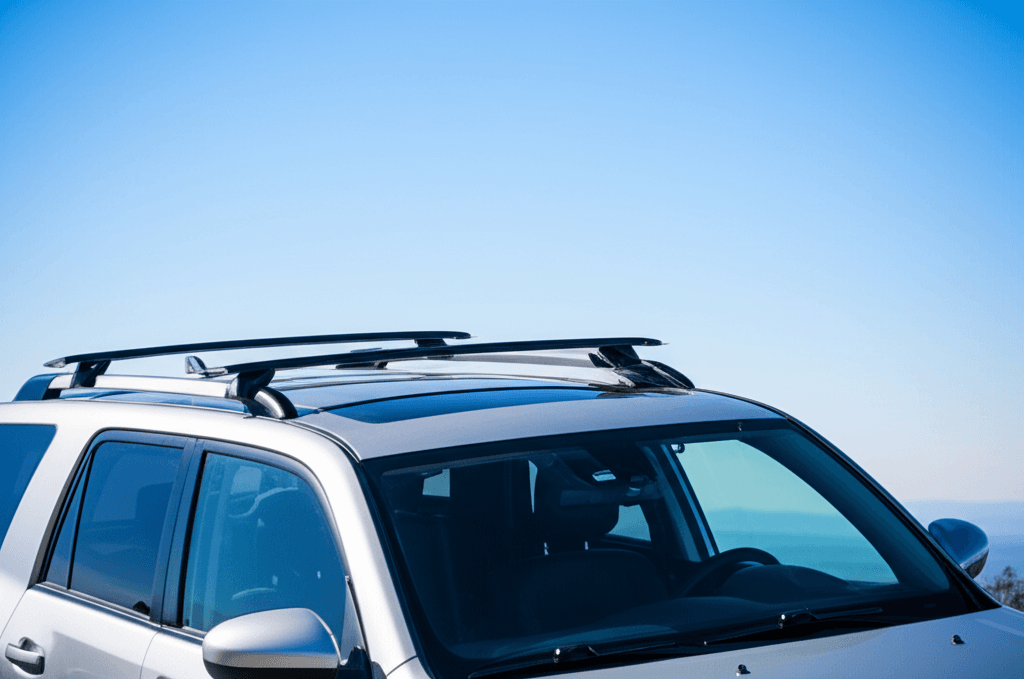
This is often the most impactful solution. A wind fairing is like a small spoiler for your roof rack. It’s usually a curved piece of plastic or metal that attaches to the front of your roof rack bars.
How it works: The fairing deflects the air over the rack bars instead of allowing it to flow directly into them. This smoother airflow dramatically reduces turbulence and, therefore, noise. Think of it as a way to make your roof and rack act more like a single, aerodynamic unit.
What to look for:
- Size: Make sure the fairing is appropriately sized for your rack and vehicle.
- Material: Most are made from durable plastic.
- Mounting: Easy-to-use clamps or straps are common.
Many roof rack manufacturers offer specific fairings for their systems. If yours doesn’t, universal options are available. A quick search for “[Your Roof Rack Brand] wind fairing” should get you started. For example, Thule and Yakima, popular brands, have dedicated fairing solutions for their crossbar systems.
DIY Tip: If you’re unable to purchase a dedicated fairing, some people have success creating their own solutions using flexible plastic sheeting and strong ties, though this requires more ingenuity and experimentation. Ensure any DIY solution is securely fastened to prevent it from becoming a hazard.
2. Secure Loose Components and Check Fittings
Noise can often be caused by parts of your roof rack that have vibrated loose over time. This includes the crossbars themselves, the feet that attach to your car, and any attached accessories.
What to check:
- Crossbar Clamps: Ensure the bars are firmly clamped down and aligned.
- Foot Pack Screws: Tighten any visible screws or bolts that hold the rack feet to your vehicle’s mounting points.
- Accessory Mounts: Double-check that bike racks, kayak carriers, or cargo boxes are securely attached to the crossbars.
Tools you might need:
- A basic toolkit with screwdrivers and wrenches.
- A torque wrench (if specified by your rack manufacturer for precise tightening).
How to do it:
- Park your car safely: Find a level spot, turn off the engine, and engage the parking brake.
- Visual Inspection: Look for any parts that seem loose or out of place.
- Gentle Wiggling: Try to gently wiggle each component. If it moves, it likely needs tightening.
- Tighten systematically: Work your way around the rack, tightening any loose fasteners. Be careful not to overtighten, which can strip threads or damage components. If your rack manual specifies torque settings, use a torque wrench for precision.
External Resource: For information on proper tool usage and basic car maintenance, resources like AutoZone’s DIY tool guide can be incredibly helpful.
3. Use Anti-Noise Tape or Fairing Tape
If you don’t want to install a full wind fairing or need an extra layer of noise reduction, special aerodynamic tape can be applied to the edges of your roof rack bars.
How it works: This tape, often made of rubber or a specialized polymer, smooths the airflow around the leading edge of the bars. It effectively fills in the sharp edges that create the most disruptive turbulence. Think of it like adding a streamlined “nose cone” to your bars.
Where to apply:
- The front edge of your crossbars is the primary location.
- If you have certain types of accessories, applying tape to their leading edges might also help.
What to look for:
- Aerodynamic Profile Tape: Specifically designed for roof racks.
- Durable Adhesive: It needs to withstand weather and speeds.
- Easy Application: Most come in rolls that you cut to length.
Brands like Rhino-Rack and others offer “wind diffusion strip” or “noise reducing tape” that fits into the T-slots of their crossbars or adheres to the outside. This is a simple, cost-effective solution that can make a noticeable difference.
4. Install Foam Padding or Rubber Strips
Similar to anti-noise tape, foam padding or rubber strips can be placed around bars or at contact points to absorb vibrations and smooth airflow.
How it works: This method focuses on dampening vibrations and creating a softer surface for the air to flow over. It’s particularly useful for reducing rattling noises or when you want to protect your car’s paint from the rack.
Where to use it:
- Wrapped around the crossbars.
- Placed between the feet of the rack and the car’s roof.
- Used to cushion accessories against the bars.
What to look for:
- Closed-cell foam: Resists moisture and holds its shape.
- Weather-resistant rubber tubing or seals.
- Adhesive-backed options for easier installation.
You can often find suitable materials at hardware stores or automotive supply shops. Look for pipe insulation foam or weather stripping designed for outdoor use. Ensure it’s cut to fit snugly, as loose padding can create its own noise.
5. Ensure Proper Alignment and Placement
The way your crossbars are positioned can affect wind noise. Manufacturers often recommend specific spacing for their crossbars.
How it works: Misaligned or improperly spaced bars can create pockets of turbulence or allow air to get under the bars more easily, leading to noise. Correct placement ensures the rack integrates more cleanly with the car’s overall aerodynamic profile.
What to do:
- Consult your roof rack manual: It will have diagrams and recommendations for bar placement on your specific vehicle.
- Measure carefully: Use a tape measure to ensure even spacing between the front and rear crossbars.
- Check alignment: Make sure the bars are parallel to each other and perpendicular to the direction of travel.
This is especially important if you’ve removed and reinstalled your rack. Even a slight change in position can sometimes introduce noise.
6. Understand Your Rack Type and Its Aerodynamics
Not all roof racks are created equal when it comes to noise. Some designs are inherently quieter than others.
Aerodynamic vs. Square Bars:
- Aerodynamic (Wing, Blade, etc.): These are typically flatter and shaped differently to reduce drag and noise. They are often quieter but can be more expensive.
- Square Bars: These are the classic, budget-friendly option. They are more prone to wind noise but can be made quieter with the solutions mentioned above.
If you’re in the market for a new roof rack and noise is a major concern, consider investing in a more aerodynamic design. Many modern racks have been engineered with quiet operation as a key feature. For instance, research from bodies like NASA on general aerodynamic principles can highlight how shape impacts airflow, which directly applies to roof rack design.
7. Consider Accessories That Can Reduce Noise
Sometimes, noise isn’t solely from the bars but from accessories attached to them.
Bike Racks: Fork-mount racks can sometimes create wind noise that’s different from bare bars. Ensure the skewers are tight and that any plastic components are securely in place. Frame-mount racks can also whistle if not aligned properly or if certain parts are loose.
Kayak/Canoe Carriers: These can catch a lot of air. Ensure the straps are tight, and if the carriers have any articulating parts, make sure they are locked down. Some carriers have integrated fairing-like elements. For kayak carriers, look for systems that lie relatively flat against the crossbars.
Cargo Boxes: While generally designed to be aerodynamic, older or poorly sealed cargo boxes can still create noise. Check that all latches are secure and that the box is properly seated on the crossbars. Sometimes, a bit of foam padding between the box and the bars can absorb vibrations.
When to Seek Professional Help or Replace Parts
While most roof rack noise issues are DIY-friendly, there are times when the problem might be more complex, or your rack might be past its prime.
Signs you might need professional help or a replacement:
- Persistent, loud noise: After trying several solutions, if the noise is still unbearable, there might be a more fundamental issue with the rack or its fit.
- Visible damage: Cracks, significant rust, or bent bars indicate that the rack might be compromised and should be replaced for safety.
- Missing or broken hardware: If you can’t find replacement parts for crucial components, it might be time for a new rack.
- Constant rattling or buffeting: This could indicate a structural problem with the rack or the vehicle’s mounting points.
If your rack is old or has been heavily used, consider if it’s still safe and effective. Newer racks often incorporate advanced aerodynamic designs specifically to combat noise.
Roof Rack Noise Reduction: A Quick Comparison Table
Here’s a handy table to help you decide which solution might be best for you:
| Solution | Ease of Installation | Effectiveness for Noise Reduction | Typical Cost | Best For |
|---|---|---|---|---|
| Wind Fairing | Easy to Moderate | High | $$ – $$$ | Significant noise reduction, especially from bar turbulence. |
| Secure Loose Parts | Very Easy | Low to Moderate | Free (if you have tools) | Rattling, buzzing, or whistling from loose components. |
| Anti-Noise Tape / Fairing Tape | Easy | Moderate | $ – $$ | Smoothing airflow on bar edges, good for moderate noise. |
| Foam Padding/Rubber Strips | Easy | Low to Moderate | $ | Dampening vibrations, cushioning contact points. |
| Proper Alignment | Moderate | Low to Moderate | Free | Noise caused by poor bar positioning. |
FAQ: Your Roof Rack Noise Questions Answered
Q1: Will all roof racks make noise at higher speeds?
Not necessarily, but most will produce some level of wind noise, especially at highway speeds (above 50 mph or 80 km/h). The design, size, and how well they are installed all contribute to how much noise is generated.
Q2: How much does a wind fairing typically cost?
Prices can range from around $50 to $150 or more, depending on the brand, size, and material. While it might seem like an investment, the peace and quiet it brings can be well worth it.
Q3: Can I use regular duct tape to silence my rack?
While duct tape might temporarily help by covering gaps, it’s generally not recommended. It’s not designed for the constant wind and weather exposure your roof rack experiences and will likely peel off quickly. It can also leave sticky residue. Specialized aerodynamic tape is a better, longer-lasting solution.
Q4: What if I have an older, square-shaped roof rack? Are there solutions for those?
Absolutely! Older, square-shaped racks are often the noisiest. Installing a wind fairing is highly effective for them. Additionally, using foam padding wrapped around the bars or applying aerodynamic tape to the edges can make a significant difference.
Q5: Should I remove my roof rack when I’m not using it?
Yes, if noise is a big concern and you frequently drive without carrying anything, removing your roof rack when not in use is the most effective way to eliminate wind noise. It can also improve your vehicle’s fuel economy!
Q6: I hear a whistling noise. What’s the most likely cause?
Whistling noises are often caused by air passing through small, consistent openings. This could be at the connection points between the crossbars and your car’s roof (where the feet attach), or sometimes from the T-slots on aerodynamic bars if they aren’t covered.
Q7: Will any of these solutions affect my car’s fuel economy?
Reducing wind noise often goes hand-in-hand with reducing aerodynamic drag. While the impact might be small, making your roof rack quieter and more aerodynamic can sometimes lead to a slight improvement in fuel efficiency. Removing the rack when not in use will have the most significant positive impact on fuel economy.
Conclusion: Enjoying a Quieter Ride
Dealing with a noisy roof rack doesn’t have to be a constant battle. By understanding why the noise happens and applying the right solutions, you can transform your driving experience. From the simple yet incredibly effective wind fairing to ensuring all your rack’s components are snug and secure, there are practical steps for every budget and skill level.
Remember, a quiet roof rack means a more enjoyable journey. You can finally hear your music again, have conversations without shouting, and focus on the beautiful scenery. So, take a little time, try out these tips, and get ready to hit the road in peace. Happy travels!