
How Much Weight in Truck Bed for Winter: An Essential Guide
As winter approaches, drivers often consider adding weight to their truck beds to improve traction. But the real question isn’t just if you should add weight, but how much weight in truck bed for winter is truly necessary and beneficial. This guide will demystify the process, offering clear advice and practical considerations to help you navigate snowy and icy roads with greater confidence and safety.
Understanding the Physics: Why Weight Matters
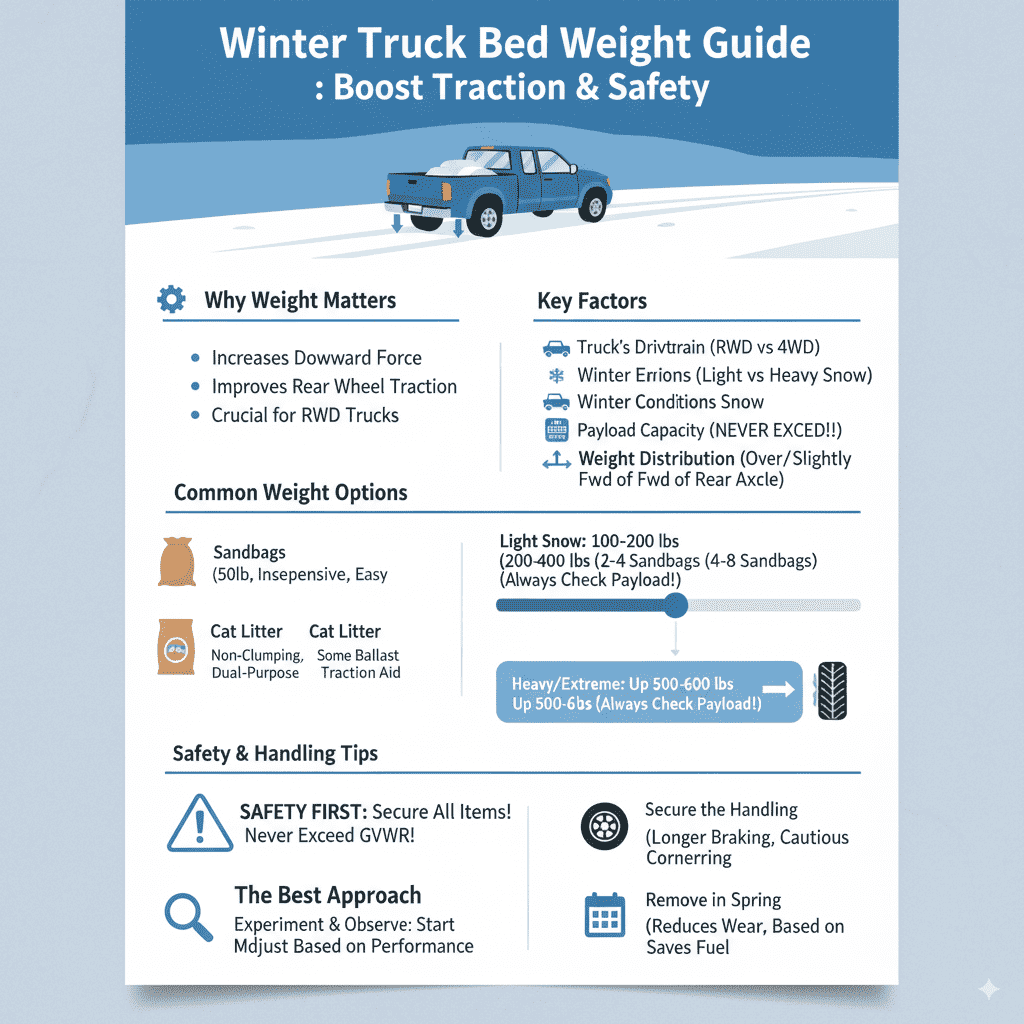
The fundamental principle behind adding weight to your truck bed is to increase the downward force on the rear wheels. Rear-wheel-drive vehicles, especially, can struggle with traction in slippery conditions because the rear axle is responsible for both carrying the load and providing propulsion. Without sufficient weight pressing down, the tires can spin easily, leading to loss of control. All-wheel-drive and four-wheel-drive systems are certainly helpful, but they can’t defy the laws of physics entirely. Even with these systems, effective grip relies on the tires being able to push against something solid. Added weight helps achieve this by forcing the tires into better contact with the road surface.
However, it’s a delicate balance. Too little weight and you won’t see a significant improvement in traction. Too much weight, and you risk overburdening your suspension, potentially compromising handling, and even exceeding your truck’s Gross Vehicle Weight Rating (GVWR), which is a serious safety concern and a legal issue. Therefore, understanding how much weight in truck bed for winter should be added is paramount.
Factors Influencing the Ideal Weight
Several factors will influence the optimal amount of weight for your truck bed in winter conditions:
Your Truck’s Drivetrain: As mentioned, rear-wheel-drive vehicles benefit the most from added weight. Four-wheel-drive and all-wheel-drive trucks may require less added weight, but can still see improvements, especially in deep snow or on extreme ice.
Typical Winter Conditions: Are you routinely driving in light dustings of snow, or are you facing heavily snow-covered roads and icy patches? Harsher conditions generally warrant more weight.
Your Truck’s Payload Capacity: This is absolutely critical. Consult your owner’s manual or the sticker on your driver’s side doorjamb for your truck’s specific payload capacity. This is the maximum weight your truck can carry, including passengers, cargo, and any aftermarket accessories. Exceeding this limit can cause serious damage to your vehicle and create a dangerous driving situation.
Weight Distribution: Where you place the weight in your truck bed also matters. Ideally, you want the weight positioned directly over or slightly forward of the rear axle. This maximizes the force applied to the drive wheels.
Type of Weight: What you choose to add also plays a role. Some materials offer more stability than others.
Common Options for Adding Weight
When considering how much weight in truck bed for winter, you’ll also need to decide on the best material to use. Here are some popular and effective options:
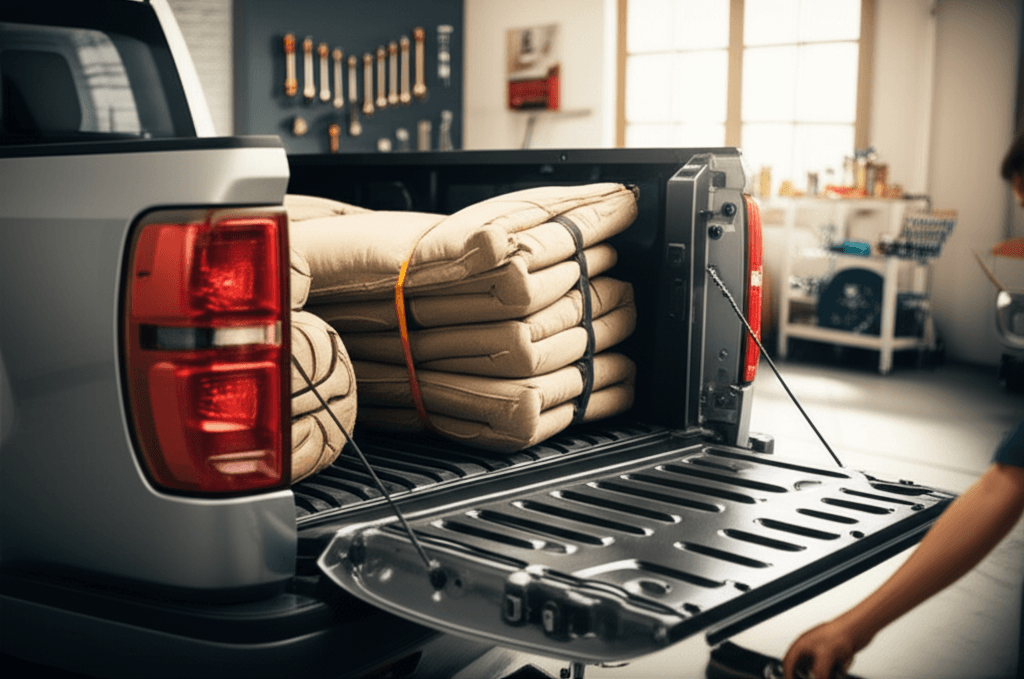
Sandbags: These are a classic choice for a reason. Sandbags are relatively inexpensive, easy to handle, and can be distributed strategically. A common approach is to use 50-pound sandbags.
Cat Litter (Non-Clumping): In a pinch, bags of non-clumping cat litter can serve a dual purpose. They provide weight, and in the event of getting stuck, the litter can be sprinkled under the tires to improve traction. Opt for the clay-based, non-clumping variety.
Rubber Matting/Tire Treads: While not as common for adding pure weight, these can offer some added ballast and significant traction improvement if you get stuck.
Weight Distribution Systems: Some aftermarket products are designed specifically for adding weight to truck beds for winter traction. These often involve strategically placed containers that can be filled with sand, gravel, or other heavy materials.
Commercial Snow Plow Ballast Boxes: If you routinely use your truck for snow removal, specialized ballast boxes are available that can be mounted in the bed and filled with heavy materials.
Determining the Right Amount: General Guidelines
So, reaching back to the core question of how much weight in truck bed for winter, there’s no single magic number. However, here are some general guidelines to consider:
For light snow and ice: You might find that 100-200 pounds of weight is sufficient to make a noticeable difference in traction, particularly for RWD vehicles. This could be equivalent to two or four 50-pound sandbags.
For moderate snow and ice: Aiming for 200-400 pounds is often a good range. This might involve four to eight 50-pound sandbags.
For heavy snow and extreme conditions: Up to 500-600 pounds may be beneficial. However, always ensure you are well within your truck’s payload capacity. If you need to carry more than 600 pounds, you need to carefully calculate your weight and consult your truck’s specifications.
Important Safety Considerations
Secure the Weight: This is non-negotiable. Loose items in your truck bed can become dangerous projectiles in an accident or during sudden stops. Ensure sandbags are tied down securely, or use a containment system.
Never Exceed Payload Capacity: As stressed before, this is your truck’s limit for carrying weight. Overloading can lead to brake failure, steering difficulties, tire blowouts, and structural damage to your truck.
Impact on Handling: Adding weight will change your truck’s handling characteristics. Your braking distance will likely increase, and cornering may feel less responsive. Drive cautiously and adjust your speed accordingly.
Consider Removal: Once winter has passed and road conditions improve, remember to remove the added weight. Carrying unnecessary weight year-round reduces fuel efficiency and puts extra strain on your suspension.
The Best Approach: Experimentation and Observation
The most effective way to determine how much weight in truck bed for winter* is right for you is through a combination of calculation and practical observation. Start with a moderate amount of weight (e.g., 200-300 pounds) and see how it performs. Pay attention to the improved grip and how your truck handles on slippery surfaces. If you feel you need more, cautiously add more weight, always respecting your payload capacity.
Ultimately, adding weight to your truck bed for winter is a smart strategy for enhancing traction and safety. By understanding the principles involved, considering your specific vehicle and driving conditions, and adhering to safety guidelines, you can effectively answer the question of how much weight in truck bed for winter and enjoy a more secure and confident driving experience throughout the season.