

Sound boxes work by using principles of physics to amplify, shape, and direct sound waves. They often utilize resonance, reflection, and acoustic impedance matching to enhance audio output, making sounds louder and clearer for the listener.
Ever wonder how a simple box can make a whisper sound like a shout, or how your guitar doesn’t sound tinny when plugged into an amplifier? It’s all about the science of sound boxes! These aren’t just empty containers; they’re clever designs that work with the natural properties of sound. Understanding how they function can help you appreciate the audio around you, from your car stereo to your favorite musical instrument. Don’t worry if you think it sounds complicated; we’re going to break down the science behind sound boxes in a way that’s easy to grasp. Ready to unlock the secrets of amplified sound?
The Basic Idea: What is a Sound Box?
At its heart, a sound box is any enclosure designed to improve the way sound is produced or heard. Think of the body of an acoustic guitar or the speaker enclosure in your car. These aren’t just for looks; they play a crucial role in the final sound you experience. The core principle is manipulating sound waves, which are essentially vibrations traveling through a medium like air.
Sound waves, when produced, spread out in all directions. A sound box helps to control this spread, making the sound more focused, louder, or richer. It does this by interacting with the sound waves in specific ways, using the shape, size, and materials of the enclosure. It’s like giving sound a helping hand to travel further and sound better.
The Science Behind the Sound: Key Principles at Play
Several scientific concepts work together inside a sound box to achieve its sonic goals. The most important of these are resonance, reflection, and acoustic impedance.
1. Resonance: The Sweet Spot of Vibration
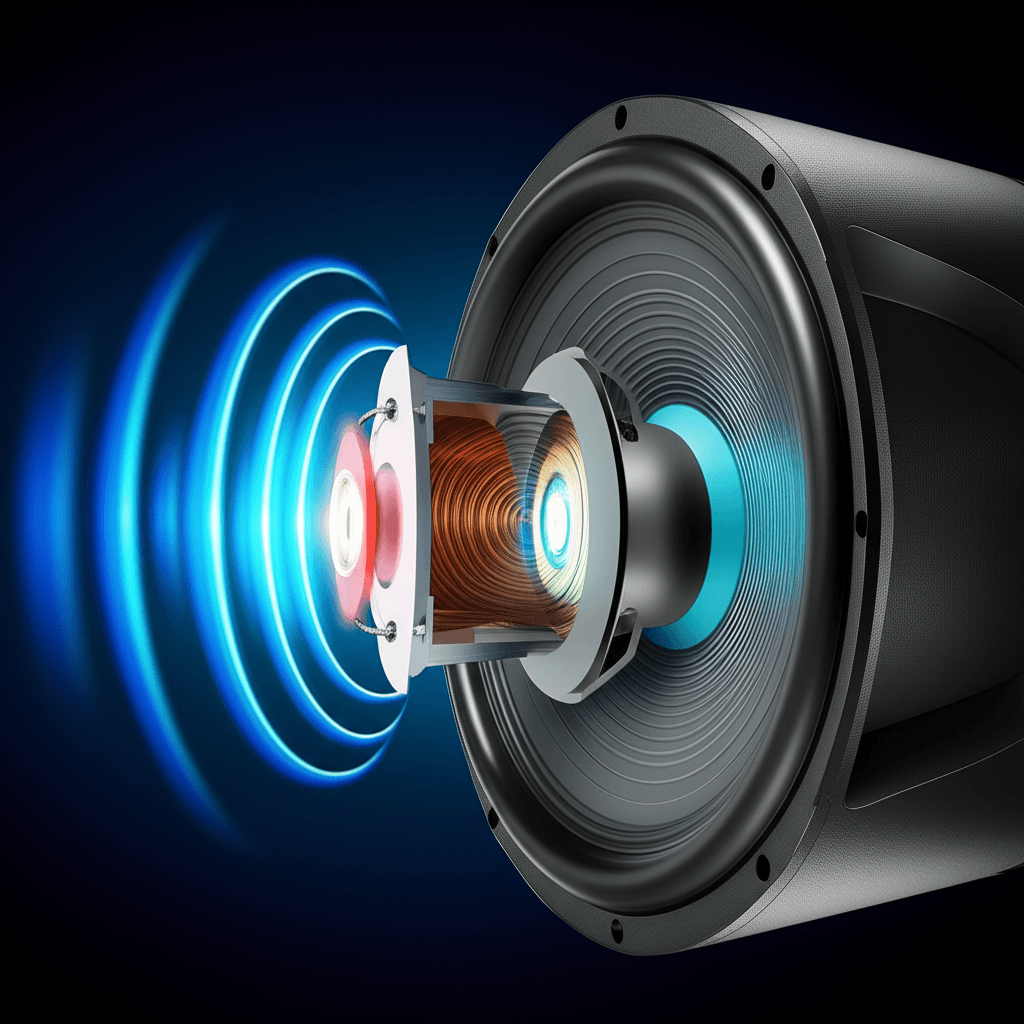
Resonance is a phenomenon where an object vibrates at a greater amplitude when it’s forced to vibrate at its natural frequency. Think of pushing a child on a swing. If you push at just the right moment (the swing’s natural frequency), you can make them go much higher with little effort. In a sound box, resonance is key to amplifying specific frequencies.
The air inside the box, along with the box’s materials, has natural frequencies at which it likes to vibrate. When a sound source (like a vibrating speaker cone or a guitar’s strings) produces sound waves at or near these natural frequencies, the air inside and the box itself begin to vibrate more strongly. This increased vibration translates into a louder, more prominent sound.
- Speaker Enclosures: In a loudspeaker, the speaker cone vibrates. The enclosure is designed so that certain frequencies produced by the cone cause the air inside the box to resonate. This boosts those frequencies, making the bass notes sound deeper and fuller. Without resonance, the bass would sound weak and distant.
- Musical Instruments: The hollow body of an acoustic guitar or the soundboard of a piano acts as a resonator. When the strings are plucked, their vibrations are transferred to the soundboard and the air inside the instrument’s body. These parts resonate, amplifying the sound and giving the instrument its characteristic tone.
The size, shape, and volume of the air cavity within a sound box are critical for determining its resonant frequencies. A larger box generally resonates at lower frequencies (better for bass), while a smaller box resonates at higher frequencies.
2. Reflection: Bouncing Sound Waves to Your Ears
Sound waves travel outwards from their source. In an open space, these waves disperse and weaken quickly. A sound box uses its walls to reflect these sound waves. Instead of letting them scatter, the box bounces them back, often directing them towards the listener or back into the sound-producing element to reinforce it.
Imagine standing in an empty room versus standing in a room filled with furniture. The empty room echoes more because sound waves bounce off the hard, flat walls and travel back to you repeatedly. A sound box uses this principle intentionally.
In a speaker enclosure, especially those with specific designs like a bass reflex (ported) enclosure, the back wave from the speaker cone is carefully managed. It can be directed to exit through a port in the box, in phase with the front wave at specific frequencies, reinforcing the bass output. This is a clever way to use reflections to boost sound.
For musical instruments, the internal surfaces of the sound box reflect sound waves. These internal reflections add complexity and sustain to the notes, creating a richer, more enveloping sound. The shape of the interior surfaces plays a significant role in how these sound waves are reflected and combined.
3. Acoustic Impedance Matching: Efficiently Transferring Energy
Acoustic impedance is a measure of how much a material or medium resists the flow of sound energy. Different materials have different acoustic impedances. For sound energy to transfer efficiently from one medium to another (like from a speaker cone to the air, or from air to your ear), their acoustic impedances need to be similar, or “matched.”
When there’s a large mismatch in acoustic impedance, most of the sound energy gets reflected away. For example, a speaker cone is a solid object moving air. There’s a significant difference in impedance between the cone and the air. This is why a bare speaker cone is not very efficient at producing loud sound.
This is where the sound box comes in. The enclosure acts as an intermediary.:
- Speaker Boxes: The speaker cone vibrates and pushes against the air inside the box. Because the air inside the box is contained, the speaker cone doesn’t have to work as hard to move a significant volume of air. This is crucial for low frequencies, which require moving large amounts of air. The box helps the speaker cone to operate more effectively, transferring more of its energy into producing sound that eventually exits the box.
- Microphones and Pickups: In reverse, when you want to capture sound (like with a microphone or an electric guitar pickup), the sound needs to efficiently transfer from the air into the sensing element. Some designs use small horns or waveguides to “concentrate” sound waves, effectively matching the impedance of the open air to the smaller opening of the microphone.
By managing the air pressure and volume within the enclosure, the sound box helps the sound source (like a speaker) to work more efficiently, transferring more of its vibratory energy into audible sound waves that travel outward.
Types of Sound Boxes and Their Designs
The way a sound box is designed depends heavily on its intended purpose. Here are a few common examples:
1. Speaker Enclosures (The most common!)
These are perhaps what most people think of when they hear “sound box.” They are fundamental to almost every audio system.
Acoustic Suspension (Sealed Box):
- How it works: A completely sealed box. The air trapped inside acts as a spring for the speaker cone.
- Pros: Excellent transient response (tight, accurate bass), very good sound quality, easy to design and build.
- Cons: Less efficient, requires a more powerful amplifier, generally not as loud as ported designs for the same size.
- Best for: High-fidelity audio, music purists, situations where accuracy is paramount.
Bass Reflex (Ported or Vented Box):
- How it works: Features a vent or port that allows some of the air pushed by the back of the speaker cone to exit the box. This exiting air is tuned to work with the front wave at specific low frequencies, effectively extending the bass response.
- Pros: More efficient, can produce louder bass, extends low-frequency response deeper than sealed boxes.
- Cons: Can be less accurate than sealed boxes, more complex to design, potential for port noise if not designed correctly.
- Best for: Car audio, home theater, subwoofers where loudness and deep bass are desired.
Here’s a quick comparison of common speaker enclosure types:
| Enclosure Type | Key Feature | Typical Applications | Sound Characteristics |
|---|---|---|---|
| Acoustic Suspension (Sealed) | Completely sealed, air acts as a spring | Hi-fi home audio, studio monitors | Tight, accurate, detailed bass; good transient response |
| Bass Reflex (Ported/Vented) | Includes a port or vent | Car audio, home theater subwoofers, PA systems | Deeper, louder bass; extended low-frequency response |
| Bandpass Enclosure | Speaker is inside a box with one or more ports, and the enclosure itself acts as a filter | Subwoofers, DJ systems | Very loud, focused bass frequencies; can be less clear overall |
| Transmission Line | Long, folded tube within the enclosure | High-end home audio, audiophile systems | Deep, natural bass with excellent clarity and detail |
2. Musical Instrument Bodies
The hollow wooden bodies of many acoustic instruments are sophisticated sound boxes.
- Acoustic Guitars and Violins: The soundboard (top of the instrument) vibrates from the strings. This vibration is transferred to the air inside the body, which then resonates. The shape and type of wood used are carefully chosen to produce a specific tonal quality by favoring certain frequencies. For example, the spruce top of a guitar is chosen for its stiffness and lightness, which allows it to vibrate freely and efficiently.
- Drums: A drum shell is a resonant cavity. When the drumhead is struck, it vibrates and causes the air inside the drum to resonate, affecting the pitch and sustain of the sound. The size and material of the drum shell (wood, metal) significantly influence its sound.
3. Megaphones and Voice Amplifiers
These simple yet effective “sound boxes” use a conical shape to direct and amplify sound.
- How they work: The wide opening captures sound waves spreading out from the source. The tapering shape then funnels these waves into a narrower opening, directing them in a more concentrated beam. This “acoustic impedance mismatch” between the wide opening and the narrow one, combined with the guiding of sound waves, makes the sound travel further and appear louder to those in front.
- Science connection: This is a brilliant example of using geometry to control sound propagation and, to some extent, impedance matching. The surface of the cone also reflects sound, preventing it from spreading outwards uncontrollably.
Materials Matter: How Construction Influences Sound
The materials used to build a sound box are just as important as its shape and size. Different materials interact with sound waves in unique ways.
- Density and Rigidity: Denser, more rigid materials like MDF (Medium-Density Fiberboard), plywood, or even solid wood are common for speaker boxes. They are less likely to vibrate themselves (which would color the sound) and can efficiently transfer energy to the air inside. Very light or flexible materials might vibrate too much, adding unwanted resonances or dampening the sound.
- Damping: Sometimes, you want to absorb certain sound waves inside the box to prevent unwanted reflections or resonances from creating a muddy sound. Materials like fiberglass batting, acoustic foam, or cotton felt are often used to line the inside of speaker enclosures. This damping helps to control the internal acoustic environment.
- Wood Properties: In musical instruments, specific woods are chosen for their unique acoustic properties. Spruce is often used for soundboards because it’s stiff yet light, allowing it to resonate well. Maple is dense and reflective, often used for backs and sides to provide a brighter, more focused tone.
The goal is usually to have a rigid enclosure that doesn’t vibrate much itself, allowing the sound source (like a speaker) to do its job efficiently, or to have a resonating body that compliments and enhances the sound produced by musical strings or reeds. For more on materials and their acoustic properties, you can explore resources from organizations like the Acoustical Society of America (ASA), which offers deep dives into acoustic science.[1]
Making Your Own Sound Box: Beginner Tips
Building a simple sound box can be a rewarding DIY project. Whether you’re making a basic enclosure for a small speaker or a makeshift amplifier, these tips will help you get started.
1. Planning is Key
- Purpose: What do you want this sound box to do? Amplify bass? Make vocals clearer? Just make a small speaker sound better?
- Size: The internal volume of the box is critical, especially for speakers. Too small, and the speaker will struggle. Too large, and it might not work as intended. For simple projects, a cubic foot of space is a common starting point for a single 8-inch speaker.
- Materials: Choose rigid materials. 1/2-inch or 3/4-inch MDF or plywood are excellent choices. Avoid thin particleboard or cardboard if you want durable, good-sounding results.
2. Essential Tools
For basic construction, you’ll likely need:
- Measuring tape
- Saw (a jigsaw or circular saw is good for cutting panels, a router is excellent for speaker cutouts)
- Drill with various bit sizes
- Screws or wood glue
- Clamps (to hold pieces together while glue dries)
- Sealant (like silicone caulk) to ensure airtightness for sealed enclosures
- Sandpaper
3. Step-by-Step Construction (General Speaker Box Example)
- Design: Sketch out your box dimensions. Remember to account for the thickness of your material when calculating the internal volume. For a sealed box, all internal dimensions contribute to the volume.
- Cut Panels: Carefully measure and cut your chosen material (MDF or plywood) into the required panels (top, bottom, front, back, sides).
- Make Speaker Cutout: On the front panel, measure and mark where your speaker will go. Use a jigsaw or router to cut a hole slightly smaller than the speaker’s mounting diameter. You want a snug fit.
- Assemble the Box: Apply wood glue to the edges of the panels and join them together using screws. Ensure all joints are tight. For sealed boxes, use sealant on all internal seams to prevent air leaks.
- Add Damping (Optional but Recommended): Line the inside walls (except the front baffle where the speaker is) with acoustic damping material like fiberglass batting or acoustic foam.
- Mount the Speaker: Secure your speaker into the cutout on the front panel using screws.
- Wire It Up: Connect your speaker to an amplifier or audio source according to the component’s instructions.
For a ported box, you would also need to calculate and cut a hole for the port, which is essentially a tube or opening that allows air to escape at a specific frequency. The length and diameter of this port are critical. Resources like Parts Express’s Speaker Enclosure Design Guide can provide detailed formulas and guidance for port calculations.[2]
Frequently Asked Questions (FAQ)
Q1: Can any box be a sound box?
While any enclosed space will affect sound, a true “sound box” is designed with specific acoustic principles in mind to enhance sound in a predictable way. A random box might make things sound muffled or distorted, whereas a designed sound box aims for amplification, tonal shaping, or clarity.
Q2: Why is my car’s speaker enclosure different from a home stereo speaker?
Car speaker enclosures are often simpler, sometimes even built into the car’s door panels, which act as a form of enclosure. They are designed to fit the limited space and often prioritize loudness and bass presence, using principles similar to bass reflex designs. Home stereo speakers might have more sophisticated designs for critical listening accuracy.
Q3: Will a bigger box always make sound louder?
Not necessarily. The volume of a box is critical for tuning resonant frequencies, especially for bass. Too large a box for a given speaker can result in weak or boomy bass, rather than cleaner, louder sound. The relationship between the speaker’s parameters and the box’s volume is key.
Q4: What’s the difference between a sound box and a soundproof box?
A sound box is designed to produce or enhance sound, manipulating sound waves to make them louder or richer. A soundproof box is designed to block sound from escaping or entering, using dense, sound-absorbing materials and airtight seals. They serve opposite purposes.
Q5: Can I make my phone speaker sound better with a simple DIY box?
Yes, there are many simple DIY projects that use materials like cardboard or plastic cups to create a passive