
If you own a Subaru Forester, you already know it’s one of the most capable all-around SUVs on the road. But the factory roof leaves serious cargo potential on the table. Whether you’re hauling ski gear, kayaks, bikes, or camping equipment, the right roof rack turns your Forester into a legitimate adventure machine.
The good news: Forester owners have more solid rack options than almost any other vehicle, thanks to its built-in crossbar mounting points on most trims. This guide breaks down the best roof racks for every Subaru Forester year and use case — so you can stop guessing and start loading.
What to Know Before You Buy a Forester Roof Rack
Does Your Forester Have Factory Rails?
Most Subaru Forester trims come with factory side rails. If yours does, you’re halfway there — you just need crossbars to span between them. If it doesn’t (rare on older base trims), you’ll need a complete foot-pack and bar system.
The easiest way to check: look at the roofline. If you see plastic-covered rails running front to back, you have raised side rails. Many aftermarket crossbars clip right onto these with no tools at all.
Weight Capacity Matters
The Subaru Forester’s roof has a static weight limit of around 176 lbs and a dynamic (while driving) limit of 150–165 lbs depending on the model year. Your rack system and all gear combined must stay under that limit. Most quality racks are rated well above this — the Forester’s roof is the actual constraint, not the rack.
OEM vs. Aftermarket
Subaru’s OEM crossbars are solid and integrate cleanly with the roof, but they’re pricier and carry less weight than the best aftermarket options. Thule and Yakima offer better load bars, more accessories, and comparable fitment — usually for less money.
Best Roof Racks for the Subaru Forester
1. Thule WingBar Evo — Best Overall
The Thule WingBar Evo is the gold standard for Forester crossbars. It uses a T-track design that’s compatible with virtually every Thule accessory — ski racks, bike carriers, cargo boxes, kayak mounts. The aerodynamic wing shape dramatically reduces wind noise compared to square bars, and the Torx key lock means your bars stay put even without gear on them.
Best for: Owners who want to build out a full rack system over time. The compatibility with Thule’s entire accessory lineup makes it the most future-proof choice.
Fits: 2014–2024 Subaru Forester (with raised side rails)
2. Yakima JetStream — Best for Quiet Driving
If wind noise is your top concern, the Yakima JetStream is the quietest bar on the market. Its blade-style profile cuts through air more cleanly than any round or square bar, and it still carries up to 165 lbs. The SKS lock cores also let you run matching keys across all your Yakima products.
Best for: Highway drivers, long-haul road trippers, or anyone who doesn’t want to wear earplugs with empty bars.
Fits: 2014–2024 Subaru Forester (with raised side rails)
3. Rhino-Rack Vortex Aero — Best Budget Pick
Rhino-Rack punches above its price point. The Vortex Aero bars are aluminum, load-rated to 165 lbs, and have a T-slot channel that accepts most universal accessories. They’re not as refined as Thule or Yakima, but for the price they’re exceptionally hard to beat — especially if you’re just starting out with roof cargo and don’t want to over-invest.
Best for: First-time rack buyers, occasional users, anyone working within a tight budget.
Fits: 2014–2024 Subaru Forester (with raised side rails)
4. Subaru OEM Crossbars — Best for Clean OEM Look
If you want the cleanest integrated look and don’t mind paying a premium, Subaru’s own crossbars are the answer. They match the factory rails perfectly, fit without any adaptation, and are covered under the Subaru accessory warranty. The tradeoff: they cost more and are compatible with fewer third-party accessories than Thule or Yakima.
Best for: Owners who prioritize OEM aesthetics and dealer warranty coverage.
How to Install a Roof Rack on Your Subaru Forester
Installation is straightforward if you have factory side rails. Here’s the basic process for most crossbar kits:
- Remove the end caps from your side rails (small plastic caps at the front and rear of each rail).
- Slide the crossbar feet into the rail channel from either end.
- Position the bars according to the manufacturer’s recommended spread — usually 24–28 inches apart for a Forester. Check the fit guide for your exact year.
- Tighten the locking T-bolts until snug, then torque to spec (typically 15–20 Nm).
- Replace end caps and snap the crossbar covers in place.
- Do a tug test: grab each bar and pull firmly in every direction. Zero movement means you’re good to go.
Total install time: 15–20 minutes. No drilling required, no permanent modifications to your vehicle.
What Can You Carry on a Forester Roof Rack?
Once your crossbars are installed, the accessory ecosystem opens up completely. Here’s what works especially well on a Forester:
- Cargo box: A rooftop cargo box is the most popular Forester add-on. The Thule Force XT and Yakima SkyBox are both excellent fits. Make sure the box clears your sunroof if you have one.
- Bike carrier: Fork-mount or tray-style carriers both work. Tray carriers (like the Thule T2 Pro) are easier to load and don’t require removing the front wheel.
- Ski/snowboard rack: The Forester is practically the unofficial car of ski towns. A locking ski carrier keeps up to 6 pairs secure and theft-resistant.
- Kayak or canoe cradles: Saddle-style cradles protect your hull on highway drives. The Forester’s roof width handles most single kayak setups comfortably.
- Rooftop tent: Yes, the Forester can handle a rooftop tent — just stay under the dynamic weight limit and use a rack rated for tent use.
The Bottom Line
For most Subaru Forester owners, the Thule WingBar Evo is the smartest long-term investment — quiet, strong, and the starting point for an entire Thule accessory ecosystem. If budget is the priority, the Rhino-Rack Vortex Aero delivers reliable performance without the premium price tag.
Whatever you choose, use the manufacturer’s fit guide to match your exact Forester model year before ordering. It takes 30 seconds and saves a frustrating return trip to the UPS store.
Recommended Product
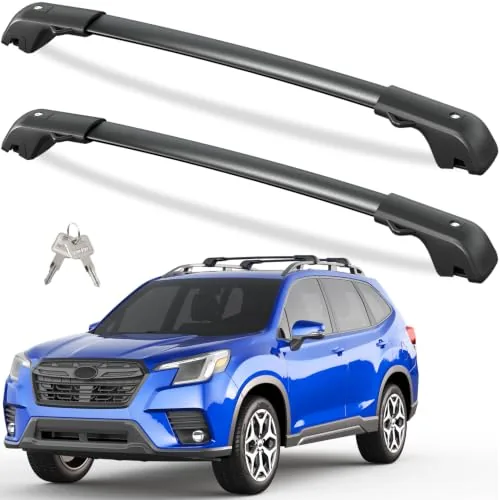
Tuyoung 300lbs Roof Rack Cross Bars for Subaru Forester 2014-2026
🛒 Check Price on AmazonFurther reading: roof rack (Wikipedia)
Gear Worth Considering
A couple of real products that fit directly with what this guide covers:
This roof rack fits Ford Expedition and Lincoln Navigator, not Subaru Forester, so check compatibility before buying for your vehicle.

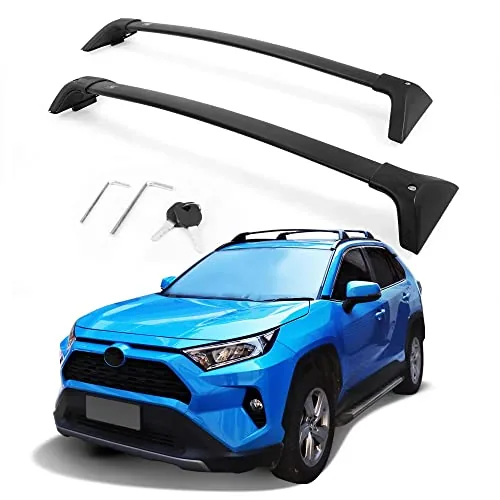
- BETTER THAN THE ORIGINAL OEM ONE .Optimized re-designed from the original OEM new RAV4 crossbar by added metal mechanism…
- THIS CROSSBAR IS CAPABLE FOR THE JOB FOR LIFE-TIME . Die-Casting mould aluminum crossbar clamp + Upgraded heavy duty 2mm…
- SUPER EASY FOR INSTALLATION : This Pair Replacement for 2019-2025 RAV4 Roof rack Cross bars NO need to drilling/modifica…
This 18 cubic foot cargo box mounts to your Forester’s crossbars, adding weatherproof storage for gear that won’t fit inside.

- 18 cubic foot (510 L) internal cargo capacity
- Made from durable UV-resistant ABS material
- Rear opening for easy access away from traffic

🛠️ Buying Gear for Your Work Truck?
A free Amazon Business account gets you bulk pricing, tax-exempt purchases, and business-only deals on tools, racks, and truck accessories.
Create Free Amazon Business AccountAs an Amazon Associate we earn from qualifying purchases.