
Storing a kayak can be challenging. Proper storage is crucial for its longevity.
Discovering the best kayak storage solutions can save space and protect your investment. Kayaks are fantastic for water adventures, but finding a place to store them can be tricky. If left outside or improperly stored, they can get damaged. This guide will help you find the best ways to store your kayak safely.
From simple racks to creative DIY solutions, there are many options available. Learn how to keep your kayak in top condition and ready for your next adventure. Whether you have limited space or need a temporary solution, we’ve got you covered. Let’s dive in and explore some effective kayak storage solutions.
Choosing The Right Storage Location
Choosing between indoor and outdoor storage depends on several factors. Indoor storage keeps your kayak safe from weather damage. It also reduces exposure to sunlight, which can cause fading and cracking. Indoor storage may take up space in your garage or home. But it is ideal for protecting your kayak.
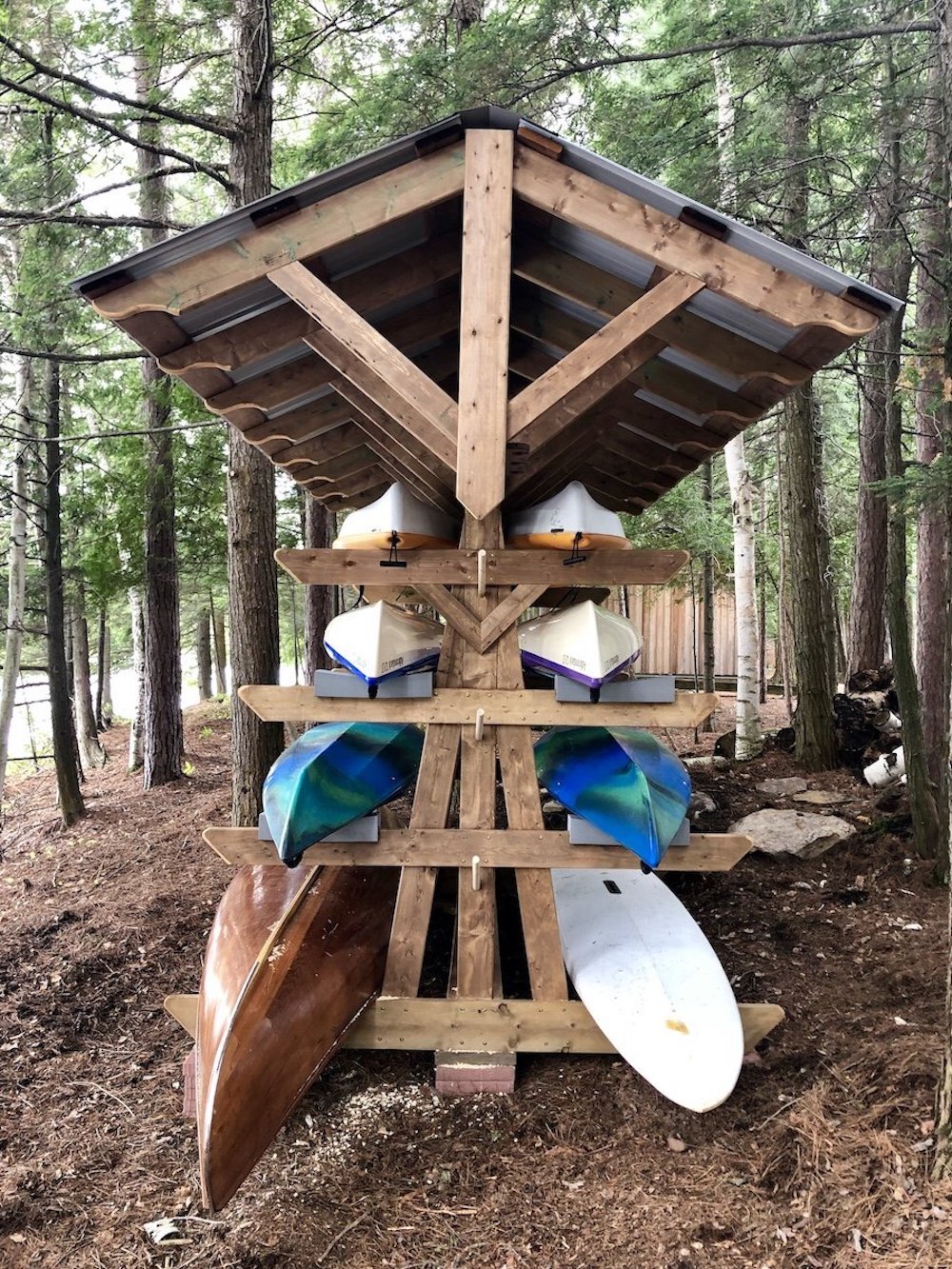
Outdoor storage is a good option if you have limited indoor space. Ensure your kayak is covered to protect it from rain, snow, and UV rays. A kayak cover or tarp works well. Make sure the kayak is elevated off the ground to prevent water damage. Outdoor storage can be convenient but requires more protection efforts.
Climate affects where you store your kayak. In hot climates, indoor storage helps prevent sun damage. Cold climates can cause the kayak to become brittle. Storing it indoors or in a shed can help. Humid environments can lead to mold and mildew. Ensure proper ventilation if storing indoors. Regularly check for moisture and clean the kayak to prevent damage. Proper storage extends the life of your kayak.
Credit: www.storageracksolutions.com
Wall-mounted Racks
Ensure the wall is strong enough to hold the kayak. Use a stud finder to locate wall studs. Mark the spots where you will drill. Make sure the marks are level. Drill pilot holes into the studs. Attach the rack brackets with screws. Double-check that the rack is secure. Test by placing a heavy object on the rack. Avoid placing the kayak until you are sure it is safe.
Choose racks made of sturdy metal or high-quality wood. Metal racks are often stronger and last longer. Wood racks give a natural look but must be treated to resist water. Check if the rack has a coating to prevent rust. Rubber padding on the rack helps protect the kayak. Avoid racks made of cheap plastic. They might not hold the kayak well. Always read reviews before buying a rack.
Ceiling Storage Options
Ceiling storage options offer effective kayak storage solutions. Keep your kayak secure and save space with ceiling racks. This method prevents damage and maintains easy access.
Pulley Systems
Pulley systems make storing your kayak easy. They use ropes and pulleys to lift your kayak to the ceiling. This frees up floor space. Pulley systems are ideal for garages and sheds. They are easy to install. Use the right tools. Follow the instructions carefully.
Hoists And Hangers
Hoists and hangers are great for keeping your kayak off the ground. They use brackets or hooks to hold the kayak. Hoists use a crank or lever to lift the kayak. Hangers can be simple hooks or more complex racks. Both options save space. They protect your kayak from damage. Choose the one that fits your space best.

Credit: www.storageracksolutions.com
Freestanding Racks
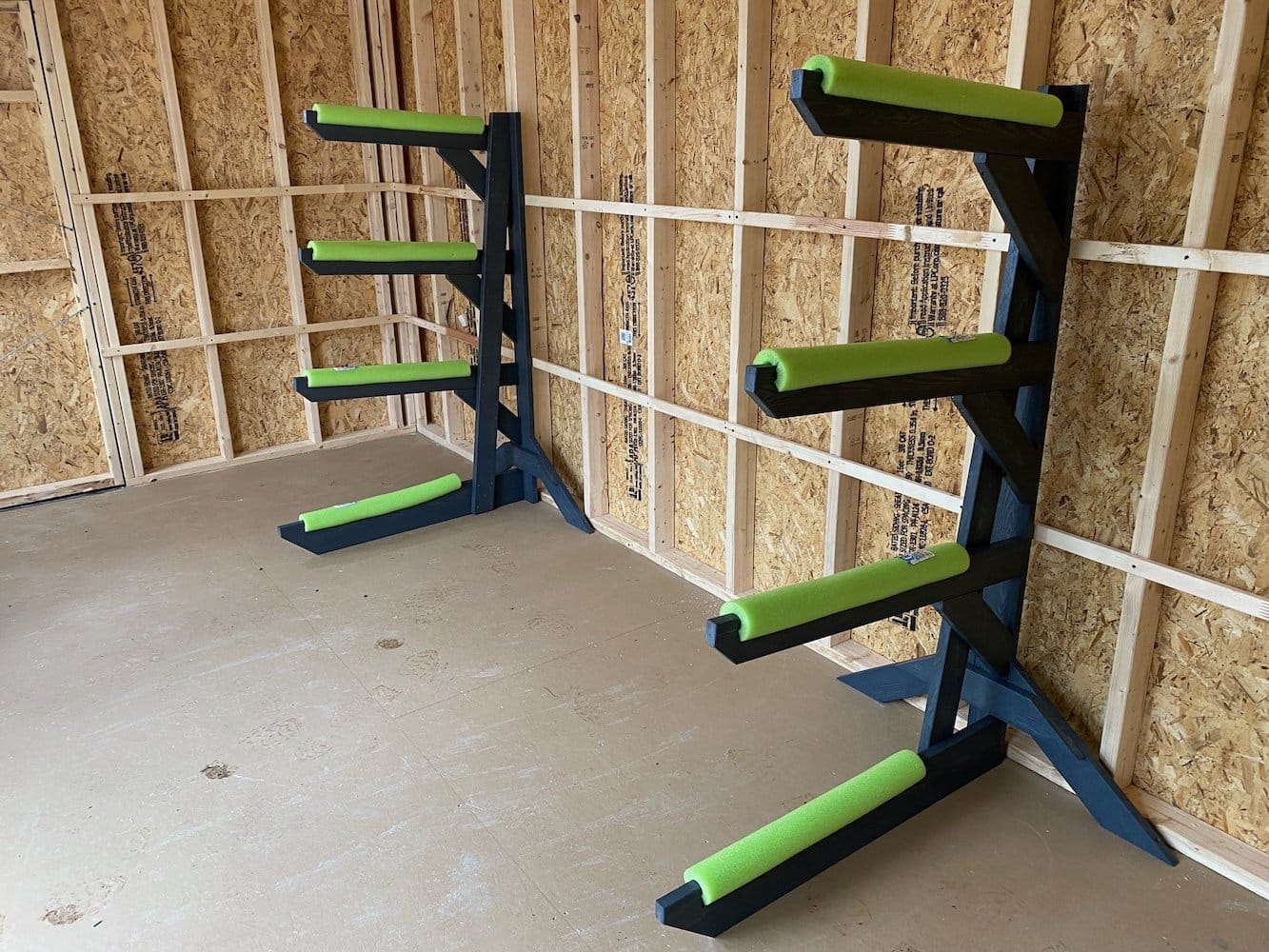
Freestanding racks help save space. These racks can fit in small areas. They are great for garages or sheds. Some racks are adjustable. This means you can change the height. Adjustable racks are more flexible. They can hold one or more kayaks.
Racks must hold your kayak’s weight. Check the weight capacity before buying. Some racks hold up to 200 pounds. Others may hold less. Always check the weight limit. This keeps your kayak safe.
Outdoor Storage Solutions
Protect your kayak with a weatherproof cover. These covers keep your kayak safe from rain, snow, and sun. Choose a cover made from durable material. Ensure it fits your kayak well. A good cover will also prevent dust and dirt buildup. Regular use of a cover can extend the life of your kayak.
Use a locking mechanism to secure your kayak. This keeps it safe from theft. Select a strong lock that is hard to break. Some locks are rust-resistant and suitable for outdoor use. Make sure the lock fits around your kayak and storage area. A good lock gives peace of mind.

Credit: www.youtube.com
Portable Storage Ideas
Folding racks are great for small spaces. They can hold your kayak securely. When not in use, fold them up. This feature saves space. Racks are easy to install. Many can be mounted on walls. They also come in different sizes. Choose one that fits your kayak. Look for racks with padding. This protects your kayak from scratches.
Always secure your kayak well. Use strong straps. Check them before driving. Avoid high speeds on bumpy roads. This can damage your kayak. If using a roof rack, ensure it’s tight. Don’t forget to cover the kayak. This protects it from the sun. Keep your kayak clean. Dirt can cause scratches.
Diy Storage Projects
Building a kayak rack at home can save money. A few materials are needed. Basic tools like a saw and drill help. Use wood for a strong frame. PVC pipes also work well. Bolts and screws secure everything in place. Rope or straps keep the kayak steady. Paint or stain the wood for a polished look.
Materials Needed
| Item | Quantity |
|---|---|
| Wood | 4-6 pieces |
| PVC Pipes | 2-4 pieces |
| Bolts and Screws | As needed |
| Rope or Straps | 2-4 pieces |
| Paint or Stain | 1 can |
Maintaining Your Kayak
Regular cleaning keeps your kayak in good shape. Use mild soap and water. Rinse well to remove dirt and salt. Look for cracks, dents, or scratches. Check the hull and deck for damage. Examine all fittings and hardware. Pay attention to the rudder and skeg. Make sure they move freely. Inspect the seat and foot braces. Ensure they are secure.
Fix small cracks with marine sealant. Use fiberglass patches for bigger holes. Tighten loose screws and bolts. Replace worn-out parts. Lubricate moving parts like rudder cables. Keep your kayak dry to prevent mold. Store it in a cool, dry place. Use a cover to protect from sun and rain.
Frequently Asked Questions
How Do I Store My Kayak Properly?
Storing your kayak properly involves keeping it clean and dry. Use a kayak rack or wall mount to save space. Avoid direct sunlight.
Can I Store My Kayak Outside?
Yes, you can store your kayak outside. Use a weather-resistant cover to protect it from UV rays and moisture.
What Is The Best Way To Hang A Kayak?
The best way to hang a kayak is by using sturdy straps. Secure it by its strongest points, usually the sides.
Should I Cover My Kayak In Storage?
Yes, covering your kayak in storage is essential. It protects against dust, UV damage, and pests.
Conclusion
Effective kayak storage keeps your gear safe and extends its lifespan. Choose solutions that fit your space and needs. Wall racks, ceiling hoists, and freestanding racks are all great options. Proper storage prevents damage and makes your kayak last longer.
Invest in the right storage solution today. Enjoy hassle-free adventures for years to come. Happy paddling!