
If you’re staring at a pile of shoes every time you walk through your front door, you’re not alone — and the good news is you don’t need a big entryway to fix it. The right shoe rack for a small entryway can transform a chaotic 6-foot hallway into a calm, organized space. This guide walks you through exactly how to organize an entryway shoe rack step by step, so you can walk in and actually feel relaxed. For more on this, check out our Best Shoe Rack For Entryway 2026 guide.
📌 Key Takeaways
- Measure your entryway before buying any rack — width, depth, and ceiling height all matter
- A tiered rack holds 2–3x more shoes than a flat bench in the same footprint
- Limiting yourself to 5–8 pairs per person near the door is the single biggest habit change you can make
- Wall-mounted and over-door options free up floor space entirely — ideal for entryways under 24 inches wide
Step 1: Measure Your Entryway Before Anything Else
This is the step most people skip — and it’s the reason they end up returning that beautiful rack that won’t fit through the door. Before you shop for anything, grab a tape measure and write down three numbers:
- Width available: How wide is the wall or nook where the rack will live?
- Depth allowed: How far can the rack stick out without blocking foot traffic?
- Height clearance: Is there a coat hook, shelf, or light fixture above that limits height?
Most standard shoe racks run 21–24 inches wide, 10–12 inches deep, and 24–63 inches tall. A typical 8-tier rack holds 16 pairs in a footprint smaller than a nightstand. If your entry is extra narrow (under 20 inches), look at angled or slanted-tier racks — they use a shallower footprint while still stacking plenty of pairs.
Step 2: Pick the Right Rack Type for Your Space
Not all shoe racks are equal — and the type you choose matters more than the brand. Here’s a quick breakdown of what works where:
| Rack Type | Best Entryway Size | Pairs Capacity | Floor Space Used |
|---|---|---|---|
| Multi-tier freestanding | Any (24″+ wide) | 8–20 pairs | Moderate |
| Over-the-door organizer | Any (door needed) | 12–24 pairs | Zero |
| Shoe bench with storage | Wider entryways | 4–8 pairs | Moderate |
| Wall-mounted floating shelf | Any (with wall space) | 3–6 pairs/shelf | Zero |
For most small entryways, a slim multi-tier rack is the sweet spot. Our top pick for tight spaces is the SONGMICS 8-Tier Shoe Rack — it holds 16 pairs in just about 10 inches of depth. If you don’t have floor space to spare at all, the Prepac Milo 5-Tier Metal Shoe Rack is slimmer and very stable. For tiny apartments where the front door leads straight into a living area, an over-the-door organizer keeps shoes out of sight entirely.
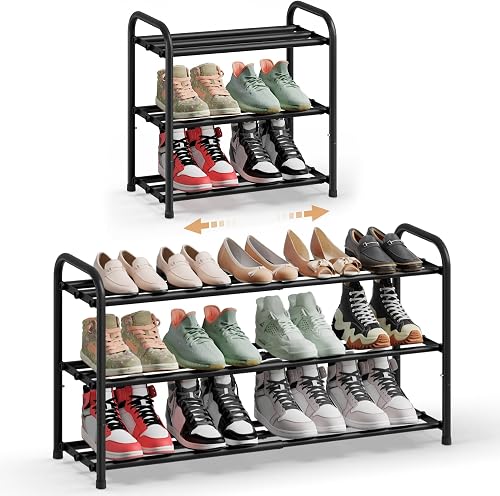
SONGMICS 8-Tier Shoe Rack Organizer
Best for: Families with lots of shoes and very little floor space
✅ Pros
- Holds 16 pairs in a slim 10″ footprint
- No tools needed — assembles in under 10 minutes
- Adjustable tiers fit boots and tall sneakers
❌ Cons
- Lightweight frame can wobble if overloaded
- Not the most stylish option
This rack fits against a narrow wall and quietly handles a family’s worth of shoes without demanding much real estate. It’s the go-to recommendation if you need maximum capacity in minimum space — especially for entryways between 20–30 inches wide.
🛒 Check Price on AmazonStep 3: Edit Your Shoe Collection Ruthlessly
Here’s the truth: no rack will fix a disorganized entryway if you’re trying to store 30 pairs at the door. The sweet spot is 5–8 pairs per person near the entrance — the shoes you actually rotate through daily or weekly. Everything else belongs in a closet, under the bed, or in a dedicated shoe cabinet.
Do a quick pass before you set up the rack. Pull out every pair from the entryway and ask: did I wear this in the last 30 days? If not, it goes somewhere else. This single habit is more powerful than any storage product you’ll ever buy.
Step 4: Position the Rack for Maximum Flow
Where you place the rack changes everything. The goal is to create a natural drop zone — a spot you’d instinctively stop at when you walk through the door. A few rules:
- Against the wall nearest the door: This is where people naturally pause to remove shoes. Don’t put the rack across the room or behind a corner.
- Not blocking the door swing: Measure at least 6 inches of clearance from the door’s arc. A rack that gets clipped every time the door opens will slide out of position daily.
- With room to sit or step back: If you’re not adding a bench, leave about 18 inches of standing room in front of the rack so you can remove shoes without hopping on one foot.
- Under a hook or coat rack if possible: Pairing a shoe rack with a wall-mounted hook above it creates a complete drop zone — shoes below, coats and bags above.
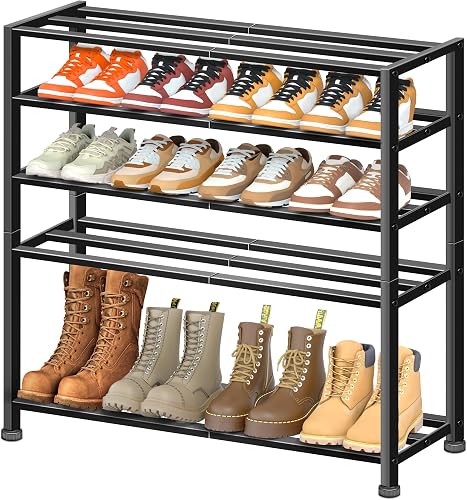
Prepac Milo 5-Tier Metal Shoe Rack
Best for: Budget-conscious buyers who want a sturdy, slim freestanding option
✅ Pros
- Very stable steel frame with anti-tip design
- Holds up to 10 pairs in minimal floor space
- Clean modern look that blends in most entryways
❌ Cons
- Not ideal for oversized boots or wide sneakers
- Assembly takes about 20 minutes
The Prepac Milo is a reliable, no-frills workhorse that earns its spot in any small entryway. Its slanted tiers drain mud and moisture away from shoes, which is a nice bonus if you live somewhere rainy or snowy.
🛒 Check Price on AmazonStep 5: Add Small Accessories to Multiply the Space
The rack does the heavy lifting, but a few small additions can dramatically improve how functional your entryway feels:
- A small tray or mat under the rack catches mud, water, and debris so your floors stay clean — especially important in winter.
- A hook rail or single peg hooks above is the best companion to a shoe rack. Hang bags, keys, and jackets right there so everything enters and exits together.
- A small basket on top of the rack for accessories like sunglasses, dog leashes, or charging cables — things that don’t have a home but always end up by the door.
- Shoe boxes for seasonal pairs — clear stackable boxes let you store off-season shoes vertically above or beside the rack without burying them.
Step 6: Build a Weekly 5-Minute Maintenance Habit
The best entryway organization system is one you’ll actually maintain. Here’s what works: once a week — pick a day, stick to it — spend 5 minutes on three things:
- Return shoes to their spots on the rack instead of the floor.
- Rotate out anything you haven’t worn in two weeks — put it back in the closet.
- Wipe down the rack and mat if there’s mud or debris.
That’s it. Five minutes a week keeps it looking the way it did on day one. The entryway is a high-traffic zone — it only stays organized if there’s a small system behind it, not just the right rack.
❓ Frequently Asked Questions
What’s the best shoe rack for a very small entryway (under 24 inches wide)?
Look for a slanted or tiered rack under 22 inches wide. The SONGMICS 8-Tier is a top choice — it’s about 21 inches wide and holds 16 pairs. Alternatively, an over-the-door organizer uses zero floor space if you have a closet near the entrance.
How many pairs of shoes should I keep at the door?
5–8 pairs per person is the sweet spot for a functional, non-cluttered entryway. That covers your daily rotation without the rack overflowing. Off-season and occasional-wear shoes belong in a closet or bedroom storage.
Should I get a shoe rack with a bench or without?
A bench adds seating for putting on and taking off shoes, which is a genuine quality-of-life upgrade — but it takes more floor space and holds fewer pairs. If your entryway is under 30 inches wide, skip the bench and use a slim rack. For 36+ inch widths, a storage bench is a great combo.
How do I keep shoes from smelling on the rack?
Let shoes air out before placing them on the rack — don’t store them while still damp. Cedar shoe inserts or small charcoal deodorizer bags placed on the rack absorb moisture and odors passively. Open or slatted racks promote better airflow than enclosed cabinets.
Can I use a shoe rack in a rented apartment entryway?
Absolutely. Freestanding racks require no drilling and leave no marks. Over-the-door organizers are also renter-friendly since they hang on the door without any hardware. Wall-mounted shelves technically require holes, but small anchors in drywall are typically minor fixes when you move out.
Wrapping Up
Organizing a small entryway with a shoe rack isn’t complicated — it just requires the right order of operations: measure first, choose the right rack type, edit your collection down to your actual daily rotation, position the rack where you’ll naturally use it, and build a 5-minute weekly habit to keep it that way.
If you’re still deciding between products, the best shoe racks for small spaces guide compares the top picks side by side with specs. And if your entryway needs something beyond a standard rack — like a full mudroom setup — the complete shoe rack buying guide has you covered.
Start with Step 1 today. Measuring takes two minutes, and it’ll save you a return trip to Amazon next week.
Further reading: roof rack (Wikipedia)
Gear Worth Considering
A couple of real products that fit directly with what this guide covers:
This 8-tier tiered rack fits the guide’s tip that tiered racks hold far more pairs than a flat bench in the same footprint.

- Maximize Your Shoe Storage Space: This tall shoe rack organizer holds 32–40 pairs of men’s and women’s shoes. Perfect as…
- Heavy-Duty Metal Shoe Rack for Boots: Built with reinforced steel frame and dense wire shelves, this metal shoe rack sup…
- Adjustable Shelf for Boot Storage: Designed with a flexible bottom tier, this shoe shelf organizer easily adjusts to fit…
This over-the-door organizer frees up entryway floor space entirely, ideal for the narrow entryways under 24 inches wide the post addresses.

- 【Larger Storage Capacity & 42% Wider Design】 This 10-tier over-the-door shoe organizer holds 20-30 pairs of shoes, makin…
- 【Reinforced Transparent Fabric】Made of high-quality breathable non-woven fabric and transparent PVC. High-quality non-wo…
- 【20 Extra-Large Pockets for All Your Shoes】This shoe organizer features 20 extra-wide, deepened pockets (22.5″W x 10″D) …

🛠️ Buying Gear for Your Work Truck?
A free Amazon Business account gets you bulk pricing, tax-exempt purchases, and business-only deals on tools, racks, and truck accessories.
Create Free Amazon Business AccountAs an Amazon Associate we earn from qualifying purchases.