
Quick Summary: Yes, you can put truck bed liner over rust, but only if you properly prepare the rust first. Simply spraying liner over loose, flaky rust won’t work and will lead to bigger problems. The key is to clean, treat, and seal the rust before applying your chosen bed liner for a durable, long-lasting finish.
Even looking at a speck of rust on your truck bed can feel like a punch to the gut. It’s a sign of wear and tear, and a potential headache for any truck owner. Many of us wonder if there’s a quick fix. Specifically, can you simply spray over that rust with a tough truck bed liner and call it a day? The good news is, with the right approach, the answer is yes! This guide will walk you through exactly how to tackle rust before it gets worse and how to apply truck bed liner for a clean, protected finish. We’ll break down the process step-by-step, so anyone can feel confident doing it.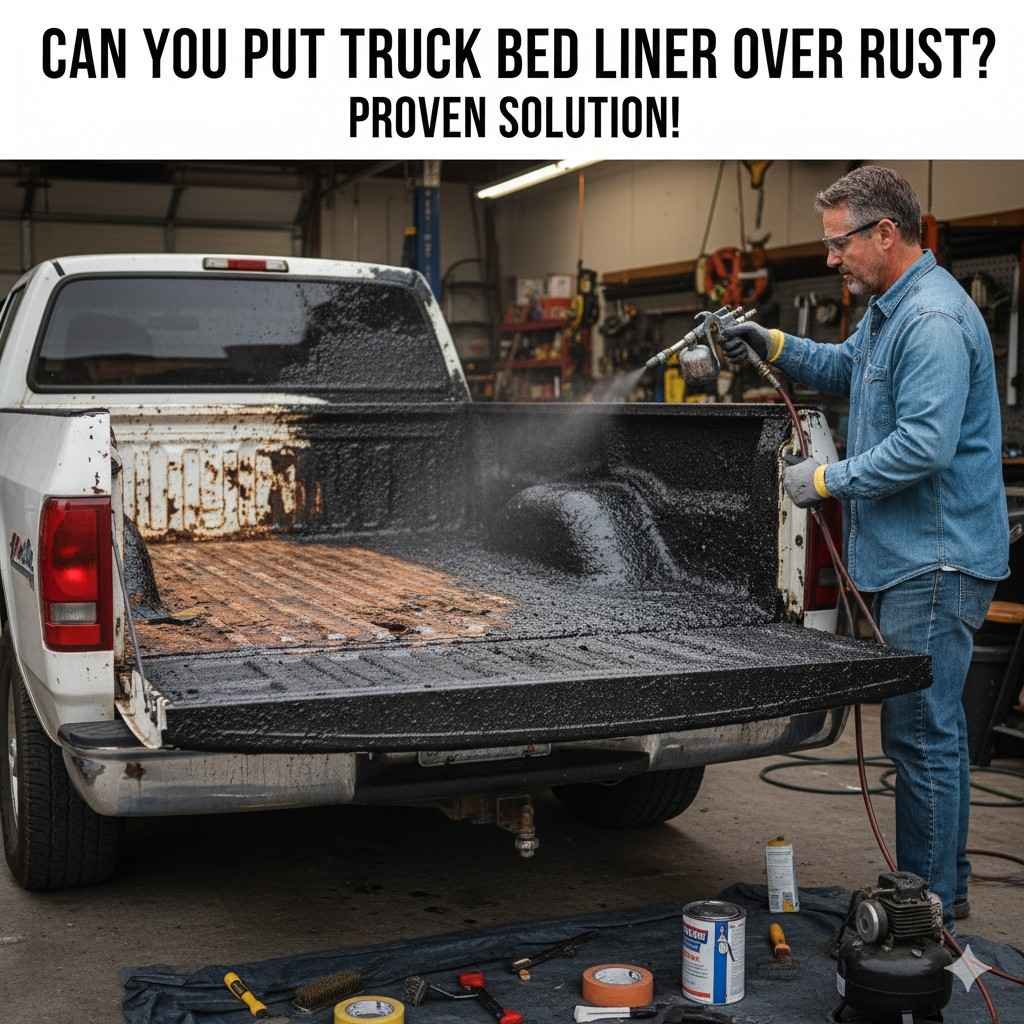
Why Rust is Your Truck’s Enemy (And What to Do About It)
Rust, or iron oxide, forms when iron or steel is exposed to oxygen and moisture. It’s an electrochemical process that weakens the metal, making it brittle and eventually causing it to crumble. In your truck bed, rust can start from small scratches or chips in the paint, or from areas where water can pool. Once it begins, it spreads insidiously, compromising the structural integrity of your truck bed and making it look unsightly.
Many folks think that slapping a protective coating, like truck bed liner, over rust will magically stop it. While bed liner is fantastic for protecting a healthy surface, it’s not a miracle cure for existing rust. If you try to cover up surface rust without proper preparation, the rust will continue to grow underneath the liner. This is because the liner won’t adhere properly to the compromised metal, and moisture trapped beneath the liner will feed the rust. The result? The liner will eventually bubble, peel, and detach, taking a chunk of your truck bed with it, and leaving you with a much bigger rust problem.
Can You Put Truck Bed Liner Over Rust? The “Yes, BUT…” Answer
The direct answer is yes, you can put truck bed liner over rust, but it absolutely requires proper preparation. Think of it like this: you wouldn’t paint over mold and expect it to go away. You have to clean and treat the mold first. The same principle applies to rust and truck bed liner.
Here’s the crucial difference:
Spraying over untouched rust: This is a bad idea. The liner won’t seal the rust, and it will continue to spread, causing the liner to fail.
Preparing the rust, then spraying: This is the proven solution! By removing as much loose rust as possible and treating the remaining rust, you create a stable surface for the bed liner to adhere to. This stops the rust’s progression and provides long-term protection.
This guide will focus on the “proven solution” by detailing the essential preparation steps.
The Proven Solution: Step-by-Step Rust Preparation and Bed Liner Application
This process requires patience and a good set of tools, but the results are well worth it. We’ll cover everything from spotting rust to the final protective coat.
Step 1: Assess the Rust Damage
Before you grab any tools, you need to understand the extent of the rust.
Surface Rust: This is when you see a reddish-brown coating on the metal. The metal itself is still solid underneath. This is the easiest type to deal with.
Scale Rust: This is rougher, often raised rust that might show pitting or a flaky texture. You can usually scrape some of this off.
Penetrating Rust: This is the most serious. Rust has eaten through the metal, creating holes. If you have significant penetrating rust, spraying bed liner over it is not a good solution. You’ll need to repair or replace the rusted section of the truck bed. For DIY, focusing on surface and scale rust is a manageable goal.
Step 2: Gather Your Tools and Supplies
Having the right gear makes the job much smoother.
Here’s a list of what you’ll likely need:
Safety Gear:
Safety glasses or goggles
Heavy-duty work gloves
Respirator mask (rated for dust and organic vapors)
Ear protection (if using power tools)
Rust Removal Tools:
Wire brush (manual or a drill attachment)
Sanding blocks or sandpaper (various grits: 80, 120, 220)
Orbital sander or angle grinder with wire wheel/sanding disc (optional, for larger areas)
Chisel or putty knife (for scraping loose scale)
Shop vacuum or compressed air
Rust Treatment/Conversion:
Rust encapsulator or rust converter primer (specifically designed to work with your chosen bed liner system)
Mineral spirits or degreaser
Clean rags or shop towels
Cleaning and Prep:
Mild detergent and water
Tack cloth
Bed Liner Application:
Your chosen truck bed liner kit (spray-in or roll-on)
Applicator gun (if using spray-in kit)
Paint trays, rollers, brushes (if using roll-on kit)
Masking tape and paper/plastic sheeting
Step 3: Remove Loose Rust and Debris
This is the most critical step for a successful application. You need to get rid of anything that’s not solid metal.
1. Protect yourself by putting on your safety gear.
2. Start with a wire brush to manually scrub away any loose, flaky rust. For larger areas, an orbital sander with a coarse grit (like 80) or a wire wheel on an angle grinder can speed this up.
3. If you find thick, scaly rust, use a chisel or putty knife to carefully flake it off. The goal is to expose as much bare metal as possible and remove any rust that isn’t strongly bonded.
4. Once you’ve scraped and brushed, vacuum or blow away all the rust dust and debris. It’s essential to get all of it out.
Step 4: Sand the Affected Areas Smooth
After removing the loose stuff, you’ll likely have a rough, pitted surface where the rust was. Sanding smooths this out.
1. Using an 80-grit sandpaper, sand down the remaining rust spots and the surrounding paint. Feather the edges of the sanded area so there’s no sharp transition between bare metal and painted surfaces.
2. Progress to a finer grit, like 120, to further smooth out the area.
3. Finally, use 220-grit sandpaper for a smooth finish. This helps ensure good adhesion for the primer and bed liner.
4. Again, thoroughly clean the area with a vacuum or compressed air to remove all sanding dust.
Step 5: Treat and Seal the Rust
This step actively stops any remaining microscopic rust particles from spreading and creates a barrier.
1. Clean the Area: Wipe down the entire prepared area with mineral spirits or a dedicated degreaser. Use clean rags and change them frequently to avoid spreading contaminants. This is crucial for good adhesion; any oil or grime will prevent the primer and liner from sticking.
2. Apply Rust Converter/Encapsulator: Follow the manufacturer’s instructions for your chosen rust converter or encapsulator. These products chemically convert rust into a stable, inert surface, or they seal it off completely.
A rust converter often turns the rust black, indicating it has chemically changed.
A rust encapsulator is more like a durable primer that seals the rust.
Make sure the product you use is compatible with your bed liner system. Some bed liner manufacturers recommend specific primers. For example, Eastwood offers excellent rust encapsulators designed to be compatible with their coatings. Eastwood’s guide on stopping rust provides valuable insights into effective methods.
3. Allow to Cure: Let the rust treatment dry and cure completely according to the product’s instructions. This might take several hours or even overnight. Do not rush this step.
Step 6: Prime the Prepared Surface
Even after rust treatment, a good primer layer provides an excellent base for your bed liner.
1. Once the rust converter/encapsulator is fully cured, scuff the entire area to be lined with 220-grit sandpaper.
2. Wipe down the area again with a degreaser and then a tack cloth to ensure it’s clean, dry, and free of dust.
3. Apply a thin, even coat of primer. You can use a general-purpose etching primer suitable for metal, or if your bed liner kit comes with a specific primer, use that. Check the product details to ensure compatibility. For instance, some spray-in liners require a specific epoxy primer for best adhesion.
4. Allow the primer to dry fully as per the product instructions. You might need a primer surfacer for a super smooth finish.
Step 7: Apply the Truck Bed Liner
Now for the fun part! The application method will depend on whether you have a spray-in or roll-on kit.
For Spray-In Bed Liners:
1. Masking: Carefully mask off any areas you don’t want to apply the liner to. This includes the tailgate, sides of the bed, and any painted surfaces. Use good quality automotive masking tape and paper or plastic sheeting.
2. Read Instructions: Thoroughly read the instructions that came with your spray-in bed liner kit. Each product has specific requirements for application temperature, pressure, and finish.
3. Mix (if applicable): Some kits require mixing components. Follow the instructions precisely.
4. Test Spray: Before spraying the bed, do a test spray on a piece of cardboard to check the spray pattern and adjust pressure if needed.
5. Apply Coats: Apply the liner in thin, even coats. Start with a light “tack coat” to ensure good adhesion, then apply subsequent coats until you reach the desired thickness. Overlap each pass by about 50%.
6. Work Quickly: Many spray-in liners cure quickly once mixed or sprayed, so work systematically.
7. Allow to Cure: Let the bed liner cure completely as per the manufacturer’s instructions. This is essential for durability.
For Roll-On Bed Liners:
1. Masking: Similar to spray-in, mask off all areas not meant to be coated.
2. Read Instructions: Again, follow the kit’s instructions meticulously.
3. Mix (if applicable): Mix the components as directed.
4. Apply First Coat: Use a roller for initial coats to cover large areas evenly. Apply in thin, consistent coats.
5. Use Brush/Roller for Details: Use a brush for edges and tight spots.
6. Apply Subsequent Coats: Apply additional coats as recommended, allowing proper drying time between each.
7. Texture: Some roll-on kits have a texture additive. Follow instructions for mixing and application to achieve the desired grip.
8. Allow to Cure: This is vital for developing hardness and durability.
Step 8: Final Inspection and Detailing
Once the bed liner has fully cured:
1. Carefully remove all masking tape.
2. Inspect your work. Touch up any missed spots or thin areas if necessary.
3. Vacuum out any stray particles.
Congratulations! You’ve successfully protected your truck bed from further rust and the elements.
Comparing Bed Liner Types: Pros and Cons
Choosing the right truck bed liner is key to protecting your truck from scratches, dents, and corrosion. Here’s a clear comparison between spray-in and roll-on bed liners:
| Feature | Spray-In Bed Liners | Roll-On Bed Liners |
|---|---|---|
| Application | Often requires professional equipment; some DIY kits available | Simple tools, beginner-friendly |
| Durability | Very high; excellent impact and abrasion resistance | Good, but varies by product quality |
| Appearance | Smooth, factory-like finish or textured options | Can show roller marks if not applied carefully |
| Cost | Higher upfront cost (DIY kits) or professional installation | Lower cost, especially DIY kits |
| Prep Work | Intensive prep required to prevent rust | Same prep needed as spray-in liners |
| Repairability | Harder to achieve a seamless repair | Easier to spot-repair or recoat specific areas |
| Examples | Rhino Liner, Line-X, aftermarket spray kits | Herculiner, Durabak, Rust-Oleum Truck Bed Coating |
Bottom Line:
If you want maximum durability and a sleek finish, spray-in liners are ideal but come at a higher cost and more complex installation. For affordable, DIY-friendly protection, roll-on liners are a great choice, especially if you don’t mind minor imperfections.
Frequently Asked Questions (FAQ)
Q1: Will bed liner stop existing rust?
A1: No, bed liner alone will not stop existing rust. It can only protect a properly prepared surface. You must remove what you can and treat what remains before applying liner.
Q2: How much rust can I have before bed liner isn’t an option?
A2: If the rust has caused holes or significant structural weakening (penetrating rust), bed liner won’t fix it. You’ll need to repair or replace the metal first. For surface or light scale rust, bed liner is a great solution after proper preparation.
Q3: What’s the best way to remove rust from a truck bed?
A3: The best way is a multi-step process: scrape loose scale, wire brush, sand with progressively finer grits (80, 120, 220), and then thoroughly clean and treat with a rust converter or encapsulator followed by a primer.
Q4: Can I just use a rust encapsulator without bed liner?
A4: Yes, you can use a rust encapsulator on its own as a protective coating, but it likely won’t be as durable or aesthetically pleasing as a dedicated truck bed liner. Combining them offers the best of both worlds. Reputable brands like Por-15 provide robust rust-stopping solutions that can be used standalone or as a base. POR-15’s guide on metal preparation details their effective system for tough protection.
Q5: How long does it take for truck bed liner to cure?
A5: Curing times vary greatly by product and environmental conditions (temperature, humidity). Most DIY kits take 24-72 hours to fully cure to a point where you can use the bed, but deeper curing and optimal hardness can take up to a week or more. Always check the manufacturer’s instructions specific to your product.
Q6: Do I need special tools for spray-in bed liner?
A6: Many DIY spray-in kits come with an aerosol can applicator or a simple spray gun attachment. Professional spray-in liners often require specialized equipment, but for DIY, the provided tools are usually sufficient if you follow instructions carefully.
Q7: Will the bed liner stick to the rust converter?
A7: Yes, provided you use a rust converter or encapsulator that is specifically designed to be coated over and that you follow the curing and recommended primer steps. It’s crucial to use compatible products.
Conclusion
Tackling rust on your truck bed doesn’t have to be a daunting task. By understanding that you can* put truck bed liner over rust – but only after proper preparation – you unlock a powerful way to restore and protect your truck. Scraping, sanding, treating, priming, and finally applying your chosen bed liner transforms a rust problem into a durable, protective solution.
Remember, patience and thoroughness are your best tools. Don’t cut corners on rust removal and preparation. A little extra effort upfront will save you a lot of headaches and money down the road, ensuring your truck bed remains strong, functional, and looking great for years to come. So, roll up your sleeves, gather your gear, and give your truck the protection it deserves!